Wednesday, September 19, 2012

Historical Hats


I began my morning yesterday realizing I had a few things to do that didn't have anything to do with any of my goals or work....making appointments for others....finding paperwork for others....washing clothes for others....and thinking about two or three projects I needed to finish up for others.

It's not that I mind doing these things...hardly.  I like to help, but more and more I find my day is full doing a list of things that don't have anything to do with a table of contents I must flesh out, articles to write, and seeing writing opportunities......or at least answering the emails when the opportunities seek me out.

Just a normal day for me as I grew more frustrated by the minute, but this time my thinking and my realizing left my brain, moved down my arms and out my fingers to a Facebook status that said, "I wear too many hats that aren't mine...some by misguided choice, some that are inherited and some are foisted upon me.  I'm going to stop.  Take your friggin' hat and wear it yourself....'

Later, while I was working out at the gym I thought about my status, and then my mind wandered to hats in general.

My first introduction to hats was at Greenbriar Mall west of Atlanta when I was five or six.  Mother frequented  Rich's department store....an Atlanta mainstay....quite often.   Well, actually......very, very often.  She knew most of the clerks by name, and they knew her, too.    I can close my eyes and actually walk around the store in my mind I was so familiar with the layout.  

Right in the center of the store were the escalators with the bakery on one side and the hat department as well.  Every now and then if I caught Mom in the right mood she would give the clerk a smile, and they would let me sit down at the table and chair in the hat department and try on a few. 

I generally went for the flimsy, wide-brimmed pastel creations...but secretly I really loved the veiled concoctions.   At the time I just knew I liked them....now I know I liked them because they were deliciously sexy...add in a pair of matching leather gloves you can only remove by unbuttoning five or six covered buttons, and.....

Oh my....


In another life I had to have worn hats....I MUST have....and mourn the fact that they just aren't worn that much anymore....at least not in the circles I travel.  

I turned away from my hat desires to think about other hats....hats in history.

Historical hats....

There had to be some.....right?

Earlier this year the Victoria and Albert Museum had an exhibit regarding hats.  Of course, since the exhibit ....a collaboration between the museum and Stephen Jones....was in Great Britain the collection included hats belonging to former queens including Queen Victoria and Queen Elizabeth The Queen Mother.

When we think of Queen Victoria we tend to think of a rather large aging lady in black as she spent the last several years of her life mourning the passing of her husband, Prince Albert, but for many years she dressed very colorfully including fancy bonnets.  The collection at the Victoria and Albert Museum included a bonnet from the 1840s....a construction made of plaited horse hair and salmon pink ribbon.   You can just make it out along the bottom half of this picture.  


The beige tulle and lace hat worn in the late thirties by Queen Elizabeth The Queen Mother was also in the collection.   She wore the hat for a series of well known photographs taken by Cecil Beaton on the grounds of Buckingham Palace.  
Turning towards American History the most iconic man's hat would have to be Abraham Lincoln's use of the top hat.  Lincoln was already a tall man.  It is said he was taller than most no matter where he went, so wearing a top hat was like a six foot woman deciding to wear five inch heels.  

This hat is the one President Lincoln wore on the last night of his life...April 14, 1865.  It's on display at the Smithsonian Institute.  


My research indicates President Lincoln bought this particular hat from J.Y. Davis, a Washington hat maker.  Notice the black silk band....Lincoln had this added to the hat in remembrance  of his son Willie.  

Following the assassination the War Department took possession of the hat and other items left behind at Ford's Theater.  From there the hat became the property of the Patent Office and later was transferred to the Smithsonian where it has remained.  In those days the employees of the Smithsonian Institute were instructed not to exhibit the hat and not to mention that it was there because of the furor it might cause in those early years following the President's death.

The hat remained in a basement storage room for almost thirty years before it was finally displayed in 1893 when the Lincoln Memorial Association borrowed the top hat for an exhibition.  

Of course, today....it's one of the most popular artifacts of American History the museum owns.

Unfortunately, another iconic hat in American History is also connected to an assassination ....the Kennedy assassination.

The American public was first introduced to the pillbox hat during the Kennedy inauguration.

This article states:

[The hat was] a fawn-colored domed pillbox created by a then unknown 29-year-old named Roy Halston Frowick.   The hat sat tilted toward the back, nearly doubled the size of her head, frankly, and creating a pretty contrast to her striking dark looks.  She was nothing the country had ever seen.   A fashionable, beautiful and highly cultured First Lady, one who not only spoke fluent French but effortlessly shopped in Paris and New York.   Across the country, women unanimously agreed:  This young woman was their new fashion icon.  For his part, Halston had no idea what was coming.

Jackie Kennedy also wore a pillbox hat on that fateful date in Dallas, Texas.


The pillbox hat First Lady Jackie Kennedy wore the day her husband was assassinated is as iconic as the pink suit.  

This article from 2011 advises the suit was turned over to the National Archives, but the hat is missing and remains missing to this day.

Somewhere inside the hospital [that fateful day in Dallas], the hat came off.  "While standing there I was handed Jackie's pillbox hat and couldn't help noticing the strands of her hair beneath the hat pin.  I could almost visualize her yanking it from her head," Mary Gallagher, the First Lady's personal secretary, who accompanied her to Dallas, wrote in her memoir....

The pink suit, blood-stained and perfectly preserved in a vault in Maryland, is banned from public view for 100 years.  The pillbox hat...is lost, last known to be in the hands of [Gallagher], who won't discuss its whereabouts... 

....[At some point following the assassination], a box arrived at the National Archives, where such treasures as the Constitution and the Bill of Rights are kept.  In it were the suit, blouse, handbag, shoes, and even her stockings, along with an unsigned note on the letterhead of Janet Auchincloss, Jacqueline Kennedy's mother:  "Jackie's suit and bag worn November, 22, 1963.

No hat.

One has to wonder about the  hat.....

Ah.........yet another mystery in history.

Sunday, September 16, 2012

A Business Degree Is Always a Smart Choice

I've always advised students you can't go wrong with a business degree.   It gives you several ways to go with a career and employers always like to see a candidate with a business degree.   

Lots of different people have business degrees such as Danny Glover, John Elway and Trisha Yearwood all have business degrees.   Lionel Ritche and Kevin Costner do, too.   


Via: DeVry University

Friday, September 14, 2012

Need A New Direction?


Via: CBT College

Monday, September 03, 2012

Facing the Past


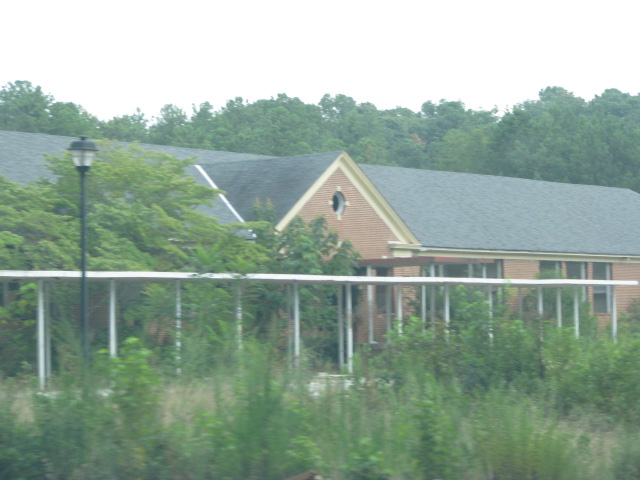
A year ago I took a short ride to my former elementary school   We had heard the school was in a state of demolition having finally been abandoned by Fulton County.  After the county stopped using the building as an elementary school and then as a police officer training facility and then as a place to store voting machines...they just packed up and left it....all alone.

The last lesson had been taught, the last kickball kicked and the last lunch tray washed years and years before.

During the summer of 2006 I visited my old friend....my elementary school....and she was looking pretty good.   A little tired and worn out, but holding her own.  You can read about my visit back then here and see a few pictures I posted. 

However, once the building was abandoned....she took a turn for the worse.  It wasn't long before the roaches and the vermin took over...and I don't just mean the kind that crawl on four or more legs. 

Crack addicts, vagrants looking for shelter broke in.....all of the copper pipes were taken as well as fixtures of any value and old glass....doors and transoms....the very tall windows.....the types of things "they don't make like that anymore."

And at some point the community...if it can be called that....began using my school as a dumping ground.  Quite frankly, I can't call my old community a "community" because how can you treat an old building....a school that was so integral to the community for so long.....like this?


The playground was no better.


A slow...agonizing death.

You can't even drive up the driveway anymore because of the junk.   The state of the building took my breath away....


It was hard to climb those steps...the same steps I sat on as a child waiting to be sorted out for kickball teams.

.....and of course by climbing those steps I was confronting the past.


We walked the hall...the oak hall that had gleamed because James, our janitor always had the floor buffer out and working away.  

I though about that as we traversed the hallway...a hallway now littered with insulation and torn ceiling tiles...piles of trash....torn up pieces of sheet rock.  At some points along the hallway we were literally tottering on piles of debris and very uncertain as to what was underneath.....even if anything would be underneath to support us.

I walked by doors I had opened and closed as a child...and transoms now broken.


There were huge holes ripped out of the flooring revealing the dark underbelly of my school....a building that had always been safe for me, but now....was quite dangerous as we gingerly walked down the hallway.


We have to face our past sometimes...the good and the bad...just like we have to face an unknown future.  There are holes.   We might get around them....some of them we fall through.....but the holes are inevitable.   Some of us get stuck in the holes....some of us eventually climb out and forge ahead to the next pile of debris or inevitable hole.

For all the joys of life..and are there many.....there will be debris.....there will be holes.

A whirlwind of events swirled around my head as I kept going down the hall.  

Why didn't I notice him more?

Why did he die at such a young age?

Where is she now?

That was so important to me then...when did it change?

This is what is left of my fifth grade classroom...the first year I had a boyfriend....a boyfriend who actually returned my feelings.


The back parking lot where I planted flowers and other plants during my fourth grade year....you would never know that now.


My first grade classroom...the room where I read about Alice and Jerry and their little dog Jip......where I poured over Richard Scarry's Busytown books and had to sit still for math.  


The walkway...now overgrown where I sat as a child waiting on my mother to pick me up.


As we drove away I whispered goodbye and took one last picture.


 I won't go back.  Ever.  It's too hard to see what my school was allowed to become. 

I'm content with my memories, but I know deep in my heart I'll continue to wrestle with my questions because apparently I've reached that season of life.....

But it is hard facing the past....good and bad.

It always is....

I'm ready for the season to change.


Sunday, August 12, 2012

Giving a Nudge to Vargas and his Nose-Art

Cute Young Man approached my desk rather gingerly because he knew he shouldn’t be up.
 
First, since it was our “silence is golden” time – that time I allotted on the plan book during the week for students to read aloud anything they wanted to from my classroom library, so he shouldn’t have been out of his seat since I had already given everyone a chance to choose their reading material, and we had already rotated through the restrooms.     

Secondly, since I read something during this time as well……I really didn’t like being interrupted.

Cute Young Man whispered, “Elementaryhistoryteacher, I need to ask you something.”

Hmmm….that was obvious since he was standing beside me during “silence is golden” time, but I decided not to mention that and said, “What do you need, Cute Young Man?”

He had a book in his hand….not one of mine, but it didn’t matter.   Students could bring items from home to read.   The important thing was that my students  were reading, and they were silent.

The book appeared to be an older edition of something dealing with World War II.  Cute Young Boy put the book up on my desk and said, “Look at this…..”

I quickly scanned both pages containing all sorts of images, and then I zeroed in on what he wanted me to see.  

There were several pin-up pictures on the page.   Thankfully, the women were all dressed but there were several of this type:


And there were a few planes with the same type of artwork on the nose area like this:


I explained to Cute Young Man best as I could what he was looking at with the most PG explanation I could find.     More than likely at his age he had already seen an issue of Playboy or Penthouse……..but I certainly wasn’t going there at all. 

Many bombers and fighter planes with the United States Army Air Force were painted with ‘nose art” or mascots during World War II.   It was unofficially permitted since many of the drawings depicted women who were barely clothed or entirely naked.   The "brass" pretended to look the other way in most cases.

Many of the drawings were done by crew members themselves or copied from men’s magazines.  Actresses, girl friends, etc. were used for models.

Calling these women depicted on the planes as mascots may seem a little demeaning today…..feminist groups during the Gulf War had such drawings banned….., but during World War II, the drawings were considered lucky charms, and as the war wore on many crews had little rituals and procedures they went through during each mission to ensure they made it back to base safely.  They considered the ‘nose art’ on their plane to be part of their “luck”.

The drawings in the two pictures I’ve provided above are both by Alberto Vargas.    During the war he was already known as a successful magazine and poster artist.   As far back as the 1930s he had made a name for himself creating pastel portraits of many famous Hollywood stars.

Vargas eventually signed a contract with Esquire magazine where he produced a monthly pinup in 1940, however, his contract with the magazine required he drop the final “s” on his name, so his artwork can be found under the name Varga, too.     During the course of the war through 1945 Vargas produced a pinup each month.  The artwork ended up in the hands of millions of servicemen who received the magazine for free.

The Vargas pinups are very distinctive.  The models do wear clothing, but the girls are very erotic, and are always featured on a white background.      The eroticism made Vargas’ work and Esquire magazine hit the top of the censorship list later in the war.

Many servicemen wrote Vargas asking him to produce ‘nose art’ for their planes.   He rarely turned the men down.

Today, the The Spencer Museum of Art houses almost the entire body of graphic art produced by Vargas for Esquire.

You can find more images of ‘nose art’ and how these images are trying to be saved here at  Save the Girls, however…..and I should not have to say this, but I will…..I would not share these images or Vargas’ artwork with my young students.

Wednesday, August 08, 2012

13 Olympic Controversies through the Years


When you begin to look into the number of Olympic controversies it’s a little surprising how many exist considering the purpose of the Olympic Games happens to be  goodwill, peace and reconciliation.

One of the most recent controversies caught my eye a few days ago….a controversy involving one of the most tragic events that have ever occurred during the Olympics…..the massacre of 11 Israeli athletes during the  Munich Games in 1972.  

Since that time the families of the slain athletes have tried in vain to get the International Olympic Committee to recognize the athletes who were killed during the opening ceremonies.
 
This year….the London Games……were no different.   This article from Sports Illustrated gives a little background and discusses the fight the families continue to lay at the feet of the International Olympic Committee.

Since the Sydney Games in 2000, Israel has organized a commemorative event , but the families think the International Olympic Committee should organize the event.

I see their point.  

One of the wives is quoted as saying, “They were killed on Olympic soil and the appropriate place to recognize them would be the Opening Ceremony.”

A ceremony held by the current International Olympic Committee was authorized by IOC President Count Jacues Rogge in the athlete’s village on the Monday before the opening ceremony…but the event was too low key and did not satisfy the families.

It would seem the Israeli controversy will continue until the families are satisfied.

I can’t say that I blame them.

Here are some other controversies through the years…..

2.  In 1908 the issue for the Olympics involved a flag flap.   The Grand Duchy of Finland had become independent from the Russian Empire, but was not allowed to fly the Finnish flag.  Also, Ireland participated in the games in the areas of field hockey and polo, but was not allowed to fly their own flag. 

3. American athlete Jim Thorpe was at the center of one of the controversies during the 1912 Olympics.    Once it was learned he had played professional minor league baseball he was stripped of his gold medals in the decathlon and pentathlon.   As a show of solidarity the silver medalist in the decathlon, Hugo Wieslander, refused his medals when they were offered to him.   Thorpe’s medals were finally restored to his children in 1983.

4. The controversy in 1920 involved the place selected to hold the games.   Budapest had initially been chosen but due to the fact the Austro-Hungarian Empire had been a German ally in World War I, the International Olympic Committee transferred the games to Antwerp.   I wonder if the fact the IOC that year was heavily dominated by the French had anything to do with it.   Hmmm….

5. Making clicking noises to a horse was one of the controversies de jour in 1932.   Swedish equestrian Bertil Sandstrom won the silver in equestrian dressage, but was demoted because he had “clicked” encouragement to his horse.     Sandstrom argued unsuccessfully that his saddle made the noises.

6. The entire 1936 games held in Berlin could be deemed controversial since they were held in Berlin and are considered “Hitler’s Games”, however, one of the highlights included the French and Canadian Olympians and their salute during the opening ceremony.   It appeared to some they were giving the Nazi salute, but in actuality they were performing the Olympic salute, which is similar.  Both salutes are based on the Roman salute.

7. The 1948 Summer Olympics following World War II provided a little punishment for Germany and Japan as both countries were suspended from the Olympics.   The suspension would last until 1956.

8. Boycotts were the order of the day for the 1956 Summer Olympics.   A total of seven countries boycotted the games all for different reasons.   The Suez Crisis kept Egypt, Iraq, and Lebanon out of the games, and France and the United Kingdom were upset after Egypt nationalized the Suez Canal.   The Netherlands, Spain and Switzerland boycotted in protest of the Soviet Union because they had invaded Hungary, and the People’s Republic of China was upset that the Republic of China/Formosa was even allowed to compete.

9.. Apartheid kept South Africa from the games during the 1964 Summer Olympics.   The IOC would not lift the suspension until 1992.

10. The “Power to the People” Olympics better known as the 1968 Summer Games became controversial when Tommie Smith and John Carlos performed their “Power to the People” salute………..a raised fist…….during the United States anthem.   Both Smith and Carlos had won medals in the 200 meter race.

11. The 1976 Summer Olympic controversy involved the fencing portion of the pentathlon competition.   Soviet Boris Onischenko used an épée which had a pushbutton on the pommel.  When the button was activated it would cause the electronic scoring system to register a hit…..sometimes incorrectly.  The entire Soviet pentathlon team was disqualified.

12. The French version of “the finger” was at the heart of a controversy during the 1980 Summer Olympics.   Wladyslaw Kozakiewicz, a Polish pole vaulter, used the bras d'honneur gesture when he became upset with Soviet officials who he felt was cheating.   The officials were  opening the stadium doors during his attempts to allow a disturbing flow of wind.    The gesture he made created a huge scandal and he almost lost his medal.

13.  During the 2000 Summer Olympics a Chinese gymnast by the name of Dong Fangxiao had his bronze medal taken away in 2010.   It was discovered that at the time she competed she was only 14 years old…..the rules call for participants to be at least 16.  The US women’s team for 2000 moved up into third place and received bronze medals…..ten years later.

Now if you noticed at some point my list begins to just be about the Summer Olympics.    This doesn’t mean there only controversies during the hot summer.   

Hardly.

There were controversies in the Winter Olympics, too…..

Stay tuned…..I’ll try to get to those before the closing ceremonies for the London Olympics.

Tuesday, July 17, 2012

Fruithurst, Alabama....an Example for Boom and Bust


Boom and bust – basic social studies vocabulary words, right? 

Think about how you learned these words.   I would imagine you were taught about boom and bust during an exploration of the Gold Rush, right?

Most everyone is….and that’s my point. 

Are there other situations where the terms boom and bust could be used? 

Of course there are, and recently I stumbled across one that I found really interesting via a friend.  

Let’s examine Fruithurst, Alabama – a rural little hamlet near the Georgia border in Cleburne County.   As far as population goes most elementary schools have a larger student body than Fruithurst’s total population.  The 2000 census indicates the population tops out at a whopping 200 people. 

If we transported ourselves back to 1890 and the area where Fruithurst is located we might be lucky if we found 200 people. In fact, the area wasn’t even known as Fruithurst in 1890.   The area was first known as Summit Cut and later Zidonia (pronounced “Zildonee”) by Scotch-Irish farm families.

Things began to change, however, in 1894 when a company known as the Fruithurst Company bought up large holdings of land and many of Scotch-Irish moved on to other areas.    The company was formed by a group of Northern entrepreneurs who envisioned transforming a portion of Alabama’s piney woods into a winemaking region.

Yes!   A winemaking region.

Per Wayne Ruple who wrote the book Cleburne County the Northern businessmen had several goals, but the main one had to do with creating the second best vineyards in the world
.
Most of the investors were from the Chautauqua grape belt in New York state like Garrett Ryckman of Brocton Wine Cellars.   E.B. Hammitt & Co. promoted the land.   Per Thomas Pinney in A History of Wine in America:  From the Beginnings to Prohibition, the New Yorkers wanted to promote immigration to the area and to develop fruit growing through a cooperative scheme.

The town name – Fruithurst – came about through a contest the organizers held.   One woman was the lucky winner of $25 for coming up with the name.

Part of the scheme involved encouraging immigrants from Germany, Sweden and even Hungary.  Every man who bought ten acres of vineyard land was given a lot in the town, its location determined by the type of house he planned to build.

The developers laid out an ambitious “model city” with intricate diagonal streets instead of the usual checkerboard pattern.   Promoters planned everything….even where the flagpole would go…..and right behind the flagpole was the Fruithurst Inn, a large hotel built for $40,000.   The building had 3-stories, 80 rooms, a billiard room, bowling alley, and barber shop as well as central steam heat.

Virginia Voss Pope advises in Fruithurst, Alabama’s Vineyard Village…..Promoters and investors began to arrive so fast during this time that homes could not be constructed rapidly enough to meet the demand and many of these new arrivals had to be put up as borders.
It only took four years for Fruithurst to become a real boomtown with 800 residents from around the nation….many from Minnesota… and Europe per Ruple.  

Over 3,000 acres were planted with over 100 varieties of grapes. Various fruit trees were also planted including plum trees.   Several packinghouses were built and dozens of pickers were hired making thirty cents a day.

Ruple advises the yields were staggering.  One vineyard produced 8,324 pounds of grapes in a single year…..23,000 gallons of wine were produced in 1898.

It really looked like the Northern entrepreneurs had achieved their goal….making Fruithurst the location for the second best vineyards in the world ……..especially when a French winemaker called the Fruithurst product “the best wine [I have] seen in the South.”

However, the boom was not to last.

The vine market slumped, native vine diseases attacked the more familiar northern varieties, and a severe winter and national Prohibition helped close the wineries in 1919 per Ruple. 

The colonists found out they were selling their grapes to Northern markets at a loss, a lumber mill showed no profit, an excelsior mill and two wineries burned and most importantly state prohibition spelled the doom of the wine-making industry.  

Discouraged by these failures and unable to adapt themselves to changed economic conditions a general exodus began and eventually the property was liquidated at a sheriff’s sale.

This link takes you to page 41 of Wayne Ruple’s book….Cleburne County……where there are several pictures of the town during its heyday including homes, vineyards, and the Fruithurst Inn.   The pictures are very interesting to look at.

Over the last few years the vineyards are beginning to return to the South including the land around Fruithurst.......

I think it would be very interesting to focus on the Fruithurst story in the classroom due to the Prohibition angle as well.  Most students are taught about Prohibition as it related to the 1930s, but here in the South the years before and after the turn-of-the-century involved the Temperance Movement and Prohibition locally long before the national movement took hold.

Monday, June 25, 2012

Here Come the Mercer Brides!


Sometimes I wonder how much money I spent during my youth on magazines such as Tiger Beat and 16 Magazine.  It was the one way I could obtain all the pin-ups I wanted of my “favs” such as the Osmonds, David Cassidy, The Bay City Rollers and Rick Springfield.  

I actually made the switch from buying Matchbox cars with my allowance money to buying teen magazines a little early…..I was six. 

 Yes, that’s a little early to be reading a magazine written for giggly teenage girls, but then again…..I did have an older sister, and I wanted to do everything that she did. 

The other reason I began to buy the teen rags had to do with a special young man…..Bobby Sherman.

Oh….be still my heart.  

On September 25, 1968 Bobby Sherman entered my life and nothing was ever the same.  I’m sure he would tell you the same thing.    It was a telepathic “thing”, but he and I were going to be together forever.

Of court that date in 1968 coincides with the premiere date of the popular television show Here Come the Brides when it aired for the first time.   

All good things must come to an end though….and Bobby and I were no different.   Our relationship cooled quite a bit after the show was cancelled in 1970.  I went on to third grade and Bobby continued with guest appearances on a long list of television shows and a stab at a musical career.

During the Here Come the Brides stint Bobby Sherman played the adorable and stuttering Jeremy Bolt who along with his older brothers traveled from Seattle to Massachusetts in the 1860s to recruit brides for the lonely employees at their logging mill.

While many of the details regarding the television show was a complete Hollywood fabrication the premise of the show – lonely men in the Pacific Northwest needing brides – is based on a true story.

Asa Shinn Mercer
In 1864, Asa Shinn Mercer was the sole instructor and president of the Territorial University of Washington.  He was chosen primarily because he was the only college graduate for miles.

According to the Mercer Girls website  it was Asa’s idea, at a time when men out numbered women nine to one, to go east to seek ladies of quality and refinement to help balance the male/female ratio of the region.

Mercer devised a plan to head east to convince women to move to Seattle. 

Even now in the very lenient, very free 21st century Mercer’s idea sounds a little harebrained – even scandalous to some.

Why on earth would a woman from a city like Boston or Lowell, Massachusetts want to travel across the country to Seattle – a rustic outpost where men were men and roughing it was the norm?

We could argue the women simply wanted to satisfy a sense of adventure, but refer back to the paragraph above where I introduce the name….Asa Shinn Mercer. 

What year was it?

1864.

What was going on?

Yes, you are correct – it was the last year of the Civil War. Many of the eligible men were gone and many women felt they had a life of spinsterhood ahead of them at a time when a woman’s identity was strongly evidenced through her husband and his name.  

During Mercer’s first trip back east he managed to convince ten women to return to Seattle with him.  All but two managed to marry fairly quickly once they reached Seattle.

The second trip was more problematic.   By this time Mercer’s plans had reached a wider audience with newspapers such as the New York Herald.   The paper reported the women would find themselves in brothels or married off to old men once they reached Seattle.  Mercer’s 500 prospects for the second trip quickly dwindled to 100.

However, that group of women is very important.  Today, long time inhabitants of Seattle can trace their family lines back to those very women who took a chance and helped settle the Pacific Northwest.

Please visit the Mercer Girls website where Peri Lane Muhich provides more in depth stories of these women.

Wednesday, June 06, 2012

Endangered Historic Places


For 25 years the National Trust for Historic Preservation has been alerting the general public regarding endangered historic places.  Approximately 230 “threatened one-of-a-kind-historic treasures” have been identified since 1988. 

Whether these sites are urban districts or rural landscapes, Native American landmarks,  20th-century sports arenas, entire communities or single buildings, the list spotlights historic places across America that are threatened by neglect, insufficient funds, inappropriate development, or insensitive public policy.

The main website for this year’s list can be found here.

This year’s list includes a wide variety of places:

The Village of Zoar located in Zoar, Ohio….The historic Village of Zoar, home to nearly 200 residents, is protected from flooding by a levee built in the 1930s. Record floods in 2005, however, raised concern about the levee’s integrity. Now, the U.S. Army Corps of Engineers has started a three-year study to assess the levee’s future. One of many alternatives under consideration is removing it entirely, which could require the relocation or demolition of 80% of this remarkable historic village. 

Bridges of Yosemite Valley within Yosemite National Park in California…..Can you actually believe there are plans to remove the beautiful bridges that span the Merced River?  The 
National Park Service is preparing a comprehensive management plan for the Merced River, which flows through the heart of Yosemite National Park. Unfortunately, three historic Rustic Style bridges built in 1928 and 1932 are being considered for removal and face an uncertain future.

Malcom X – Ella Little Collins house in Boston Massachusetts….Built in 1874, this modest structure is the last known surviving boyhood home of Malcolm X. He shared the house with his half sister, Ella Little-Collins, whose son is the current owner. Largely vacant for over 30 years, plans are in development to rehabilitate and reuse the deteriorating property. In partnership with Historic Boston, Rodnell Collins dreams of preserving Malcolm X’s legacy by transforming the house into living quarters for graduate students who are studying African American history, social justice, or civil rights.

Historic Post Office Buildings… across the nation are endangered.   Last year, the U.S. Postal Service identified nearly 4,400 post offices – large and small – that it plans to study for closure. Unfortunately, city officials and local preservationists who identified new buyers or uses for endangered post offices often find themselves frustrated by a lack of information and guidance from the U.S. Postal Service…Local post office buildings have traditionally played an essential role in the lives of millions of Americans. Many are architecturally distinctive, prominently located, and cherished as civic icons in communities across the country. Unless the U.S. Postal Service establishes a clear, consistent process that follows federal preservation law when considering disposal of these buildings, a significant part of the nation’s architectural heritage will be at risk.

Joe Frazier's Gym in Philadelphia, Pennsylvania….Inside this modest, three-story brick building, Joe Frazier – a gold medal winner at the 1964 Olympics and later Heavyweight Champion of the World – trained for his victorious bout against Muhammad Ali. Today, the converted warehouse where Smokin’ Joe perfected his punch is home to a discount furniture store and two floors of vacant space. Despite growing interest in commemorating Frazier’s life (he died in 2011), the gym is unprotected; it enjoys no formal historic designation at the local or national level.

Ellis Island Hospital Complex….I know it’s hard to believe, but there are buildings on the island that have NOT been restored and are not open to the public.  Part of the Ellis Island National Monument, this mostly unused complex of buildings near the restored Immigration Museum once comprised the largest U.S. Public Health Service institution in the country. Today, few Americans realize that portions of Ellis Island are un-restored and off limits to visitors. The National Park Service stabilized the hospital structures here a decade ago, but millions of dollars still must be raised to rehabilitate the interiors of these historic buildings.

Sweet Auburn Historic District in Atlanta, Georgia…. is on the list due to “inappropriate development”. Since the district was added to the endangered list in 1992 the residential area of the district has seen  revitalization, but the commercial section has suffered.   Designated a National Historic Landmark in 1976, Sweet Auburn is a prime example of the flourishing segregated neighborhoods founded by African Americans during the Jim Crow era in the South. The neighborhood was home to countless businesses, congregations, and social organizations, and was the birthplace of Martin Luther King Jr. The house in which he was born still stands at 501 Auburn Avenue.

Terminal Island…found in the port of Los Angeles, California…..We see this all too often when historic structures are scheduled for destruction. Terminal Island played a vital role during WWI and WWII as a major shipbuilding center, and was the place where America’s tuna canning industry came of age. The island also played a key role in a tragic chapter of American history: In 1942, an entire Japanese-American community there was seen as a national threat; its residents were forcibly removed and imprisoned at the internment camp Manzanar.

Theodore Roosevelt's Elkhorn Ranch  located in North Dakota….Theodore Roosevelt hunted, ran cattle, and explored this expansive ranch in the rugged North Dakota Badlands in the late 19th century. It was here that the 26th president of the United States developed a deep appreciation for the American West and for conservation. Unfortunately, the serenity of the ranch, which lies on both sides of the Little Missouri River, is threatened by a proposed new road that would introduce a visual disruption, as well as traffic, noise, and dust.

Princeton Battlefield in Princeton, New Jersey…..This is a little hard to believe.   The site of George Washington’s victory is being threatened by a housing development.  A portion of the battle site, faces significant threats, including a 15-unit housing development for faculty of the Institute for Advanced Study. As proposed, the project would radically alter the integrity of a rare, intact battlefield.


Seriously?  


Faculty members in need of housing are threatening a major Revolutionary battlefield?!?

Texas Courthouses across the state of Texas….Texas courthouses helped establish a unique identity for each of the state’s counties, and 234 of the state’s 244 county-owned historic courthouses are still in active government use. Unfortunately, many – including some of the oldest and most architecturally distinguished – have fallen into disrepair due to inadequate funding and maintenance.