Showing posts with label colonies. Show all posts

Monday, October 17, 2011

Cotton: The Long and Short of It


Mammy's little baby loves shot'nin', short'nin',

Mammy's little baby loves short'nin' bread...

If those lyrics don't immediately bring the song to mind, you can here a version here. It's one of the first songs I learned to play on the piano many, many moons ago.

Most people believe this to be a song sung by slaves on the plantation, but it was actually first published with the lyrics I mention above in 1915.  It is considered to be a folk song.
James Whitcomb Riley is credited with creating an even earlier version in 1900.

Shortening Bread is a  wonderful mixture of cornmeal, flour, hot water, eggs, baking powder, milk and shortening and instead of baking it you serve it fried.   Shortening is used to make various types of pastry and used for frying foods.  One of my favorite uses that I try to stay away from as much as possible is frosting such as the type of frosting on wedding cakes.

Oh my!   What a wicked little pleasure that stuff is....

Did you know shortening and cotton are connected?

Yes, they are...really.

Cotton begins showing up in my curriculum early on when we discuss the British Colonies - the Southern Colonies in particular - as we examine the plantation system and look at the various crops that were raised in the fields of Georgia and other southern colonies.

Around the 1840s and 1850s, the South heads to the front of the curriculum again as we explore the Missiouri Compromise and other events leading up to the Civil War.

Sometimes the continued importance of cotton as a staple in the southern economy is missed.  Oh sure, students are taught cotton was king in the south, but I think we often help students overlook how integral the cotton crop was to the economy before the Civil War and afterwards by ending the cotton conversation after the war has been fought as we launch into Reconstruction.

The afterwards part is where I think the mark is missed in many classrooms.  Cotton remained king in the South even after the Civil War - even after the emancipation of the slaves.  For example, in 1919 in Laurens County, Georgia they ginned 37,323 bales of cotton which ended up weighing 18.7 million pounds.  In 1912, the amount increased to 30 million pounds of cotton.

No, cotton didn't go away at all.   Once cotton is ginned, and the fluffy white fibers are separated from the seeds the cotton farmer ends up with a lot of seeds, too. 

The cotton gin owners were drowning in seeds and figured there had to be some uses of them...uses that might make a few extra dollars.   They were right, of course.

The hull from a cottonseed can be fed to animals for roughage.  Ground cottonseeds can be used for fertilizer, but they can also be crushed for cottonseed oil.  30 million pounds of cotton has the potential to produce tons of seeds and gallons of cottonseed oil.

Crude cottonseed oil is dark red in color and has a very distasteful flavor and odor, but several industrious people decided there had to be a use for the oil - there had to be a way to work around the color, flavor, and odor, and ....care had to be taken since left untreated cottonseed oil could become a paralytic pesticide.

Enter The Southern Oil Company formed in 1887 who took on the cottonseed oil in order to create viable consumer products. There had to be a way to make cottonseed oil more appetizing.   They hired David  Wesson, a food chemist who was a graduate as well as faculty member at MIT.  It too Doc Wesson, as he was fondly called, 16 years to develop the process to deodorize cottonseed oil. 

The process Doc Wesson finally hit upon involved a high-temperature vacuum process that became known as the Wesson Process.

If you haven't guessed by now...the resulting product of course, was Wesson Oil currently owned by ConAgra, but when it first hit the market Wesson Oil was created by The Southern Oil Company.

Several forms of Wesson Oil exist today, but in the earliest days of Wesson Oil was made from cottonseed oil only. 

The company also wanted to develop a product that would be an alternative to hog lard.  Doc Wesson used the process of hydrogenation with the cottonseed oil and created the product they marketed as Snowdrift Shortening.

Hydrogenation involves adding a little hydrogen to help make a solid fat from the liquid oil and then it is chilled.

But the marketing department at The Southern Oil Company had a problem.  Cooks were used to using hog fat and were fairly stubborn regarding changing to an all vegetable shortening. 

Housewives across America had to be persuaded to use products like Snowdrift.  Hence the need for magazine ads posing as articles such as this one that says at one point, "Snowdrift is made entirely of this pure vegetable oil - nothing else - hardened into a creamy looking fat by hydrogenating, because - frankly - the women of this country didn't want to cook with liquid fat, but wanted it to be white and solid and look like the old fashioned hog fat they were accustomed to."

Snowdrift was advertised all over the South. One such outdoor advertisement still exist including this one in Douglasville, Georgia where I happen to live.


Yes, the Wesson Process enabled shortening to be made as well as other products such as mayonnaise, margarine, and salad dressing.

The 50th anniversary of Snowdrift was celebrated in 1951.   At that time the makers of Wesson Oil stated, "It is a story of how the crushing and refining industry made many products from cottonseed, once considered a useless part of the cotton industry, except for planting.   It is a story of a development that brought more income to the farmer of the south."

Don't shortchange students regarding the life of cotton in the South.   It continued to be a major crop that held an important role in the South on into the New South Era and the rise of the cotton mill economy.

Saturday, October 09, 2010

Ti-Ti-Tightening Those Ropes

When I was growing up the words said at bed time included ‘good night’ and ‘I love you’ along with the phrase ‘Tie-Tie’ and ‘Sleep tight, don’t let the bed bugs bite”

‘Tie-Tie’ came from me because as a little girl I couldn’t pronounce the words ‘night-night’…..all that came out was ‘Tie-Tie ‘and the phrase entered our family lexicon. If I said ‘Tie-Tie’ to my father or my sister they would know exactly what I meant.

But what about that “sleep tight” thing? Where does that come from?

Recently I posted a picture of a rope tightening key for Wordless Wednesday. The key was used to tighten rope mattresses common in colonial and post-colonial America.

Here’s a video showing how the key was used to tighten the bed ropes.


When you tour old colonial locations docents love to share with you the phrase “Sleep tight” came from the fact that you would want the ropes tight in order to get a good night’s sleep.

It does make sense, doesn’t it?

But upon closer study there is no definitive proof the saying originated from tightening the ropes.

The Oxford English Dictionary states the phrase is fairly new and Michael Quinon at World Wide Words  advises the phrase was used as late as 1916 in L Frank Baum’s Rinkitink In Oz, and Susan Eppes uses the phrase in Through Some Eventful Years dated 1866.

Most sources state ‘sleep tight’ refers to sleeping soundly or properly which dates back to Shakespeare.

The only thing we can be sure of is the tool I pictured here the other day is a device to tightening the ropes on a bed, and…….that’s about it.

Tuesday, September 28, 2010

The Importance of Silver

At some point in every young girl’s life she realizes the importance of silver.

Perhaps it is when she has a female relative who is getting married, and she overhears other female relatives and friends inquiring about the silver pattern she has registered for. Perhaps it is when she is old enough…..finally……to attend a wedding or baby shower with her mother and sees the array of silver trays, silver flatware, and silver coffee and tea services on display making the perfect refreshment table.

In my case…….it was when I was old enough to help my grandmother prepare the dining table for a family dinner…..more than likely Thanksgiving or Christmas. I can remember going to the drawer in the kitchen where the knives and forks were stored. My grandmother shooed me away and directed me in that constantly out-of-breath tone she had, “No, no…..go in the dining room and get the forks out of the box.”

The box? As I walked into the dining room I thought, “What box?

Then I saw the box where she had placed it on the buffet….a rectangular, wooden box with a hinged lid. As I got closer I saw it was pretty old and fairly beat up. There were scratches across the top and sides, but instead of repelling me the poor condition of the box made me want to open it all the more.

That was my first foray into someone’s silver box, and like many a young girl it made quite an impression on me. I walked over to the buffet and placed my hands on the wood feeling the uneven surface.

I was intrigued.

What would I find inside?

I lifted the top and discovered lovely and fairly heavy silver utensils encased in deep Columbia blue velvet. The knives were standing up along the inside cover of the box while the spoons and forks were stacked up and laying flat inside the box.

Now that I know better I realize the silver was not expensive, but for my hardworking farming and at one time mill employed grandmother the silver was her best, and she wanted to use it for a holiday dinner.

I thought it was simply lovely. I loved how it felt in my fingers and how the light reflected off it.  During dinner I refrained from using my knife because I just couldn't bear sullying it with food.  It was THAT beautiful to me.

Later I questioned my mom about the box and discovered she had a silver box as well. My mother was not prone to using her best items for meals, so realizing we had silver was quite a surprise for me. My sister and I finally convinced Mother to start using her silver for family dinners, and eventually she bought more of it to complete her set.  Today the silver is a treasure for my sister and I.

Silver is special…..silver is family history…….silver is spectacular.

Silver had its heyday in the United States between 1870 and 1920 though silver was in existence in our earliest days dating back to Paul Revere and the Dutch colonies. No matter the time period in history though silver was a luxury item and only the wealthiest homes had silver.

It was during the Victorian Age where silver flatware was its most decadent with some flatware lines having over 100 different types of pieces from a regular spoon, demitasse spoon, and a bouillon spoon. Then there’s the regular fork. Don’t get it confused with the pastry fork. Knives were in multiples as well with each flatware line having a knife for “place”, “dinner”, and one for “fruit” as well.

No wonder Victorian dining tables were so long.

This was also the time period where formal dinners went from three or four courses to ten or more including a course just for fruit and one for cheese.

Last week I posted a picture of a mahogany box and asked readers to identify what it was. I had no takers here but someone on Facebook correctly identified the box as a silver chest…..and that is exactly correct.

Here is a picture showing the box with a couple of silver pieces inside it. Notice this box is a little different from the silver box your family might own. The silver is stored upright in the little holes. It does not lay flat.


You can find out all sorts of information at the Silver Chatter blog…..a site headquartered in my neck of the woods…..Atlanta, Georgia with Silver Jim at the helm.

Monday, January 04, 2010

Bespoken Blacksmiths

Vocabulary is key when teaching any subject from Math (integer….diameter….cotangent ) to Science (antimatter…circuit…velocity) from Language Arts (compound sentence…simile…alliteration) to Social Studies ( amendment…capital resources…inalienable). If students are unable to master and manipulate the subject’s vernacular they will encounter difficulty reading various texts, understanding their notes, and once April rolls around the student might not be able to understand the questions on the all important state mandated test.

Vocabulary acts as the foundation for each instructional unit. In fact, Marzano contends in his book Building Academic Vocabulary (2005), “…students in the 50th percentile in terms of ability to comprehend the subject matter taught in school, with no direct vocabulary instruction, scores in the 50th percentile ranking. The same student after specific content-area terms have been taught in a specific way, raises his/her comprehension ability to the 83rd percentile.”

Yes, specific content-area vocabulary instruction IS very important.

Once students begin to study the English colonies the vocabulary list takes on a who’s who of colonial founders and governors along with words like indigo, indentured, and apprentice, but tucked away within the list is a great word……the word artisan.

An artisan is someone who works with his or her hands to create a product. Prior to the Industrial Revolution artisans produced goods using creative thinking and took great pride in the products they produced. If they didn’t…well, their customer base would suffer, and they wouldn’t be very successful. Knowing the customer’s needs and keeping them happy with quality work was very important.

In fact, the work of the blacksmith was bespoken meaning he only worked at the request of others.

One type of colonial artisan I like to spotlight for students is the blacksmith, and the why behind my choice is very simple. Of all the craftsmen that came to the New World the blacksmith was the most important. In fact, other types of craftsmen couldn’t have done the things they did without the help of a blacksmith.

A blacksmith forges and shapes iron with an anvil and hammer.

This article explains how the blacksmith makes the anvil sing an ancient hammer language. ”It’s a 50-part language that’s tapped out on the anvil….It’s the first thing an apprentice learns, because it’s the language that the master uses to converse with the strikers (helpers). The anvil makes a different sound depending upon where the hammer strikes. The apprentice knows where to hit the metal on the anvil based upon the “song” the master plays.”

Not only is there a special language within the singing of the blacksmith’s hammer the color of the heated metal also has a language of its own. Since early blacksmiths had no thermometer to gauge the temperature of the heated metal they learned how to judge the color. The color provides the information they need to determine when the metal is ready to twist and turn. This is the main reason most blacksmith shops are dimly lit so that the blacksmith can see the fired metal.

Hmmmm….it would seem that the blacksmith has his own content-area vocabulary….language that involves two of his five senses including observation and hearing.

Over the New Year’s holiday I got the chance to see a true blacksmith in action at the Horseshoe Bend area of the Biltmore Estate. Doc W. Cudd, Jr. (seen in my pictures with this article) gave an excellent demonstration in his smithy shop, found in the property’s 1902 horse barn, that enthralled a crowd of young and old alike. He explained that over the last 450 years there has always been at least one blacksmith in his family.

From this article I discovered that Doc Cudd received his first anvil at age 9, and began apprenticing under his dad and great uncle at age 10. After progressing to journeyman, he passed an intense test—just one portion took 18 hours—and became a blacksmith in 1995.

The article continues…."When people come see me at the barn, I always want them to feel like they're sitting on my front porch," he says. His rapport with guests is evident—he has a collection of 150 pictures that guests have sent him commemorating their River Bend Barn visit."

As I entered the smithy shop it was a tight fit as folks had stopped in and decided to stay awhile to listen to the demonstration. It is clear to this teacher that Mr. Cudd loves his profession and not only is he a master blacksmith, but he’s a master teacher as well. Passion is the true ingredient for any teacher …..and it is so very evident with Mr. Cudd.
Mr. Cudd puts the capital "A" in the word Artisan.

I witnessed Mr. Cudd creating one of his signature key rings….a key ring that is sold in the barn’s gift shop…..at the end of his demonstration he presented it and held it aloft so we could all see it.

and yes, Mr. Elementaryhistoryteacher just had to have one.
We might just have to "throw-down" over who gets to carry it.


Resources:
The poem, The Village Blacksmith by Henry Wadsworth Longfellow can be found here

A video created in 1893 titled “Blacksmith Scene” can be found here. It was first kinetoscope shown in public exhibition and was created through the Thomas Edison Laboratory. The Library of Congress selected this video clip for preservation by the National Film Registry for being “culturally, historically, or aesthetically significant.”

A great little sample chapter regarding content-area vocabulary instruction can be found here, and a slide-show featuring Marzano’s findings regarding vocabulary instruction can be seen here

Thursday, July 30, 2009

MY St. Augustine


I just returned from St. Augustine, Florida to celebrate my 25th wedding anniversary. It has everything this history teacher loves….lots of history and the beach as well. The picture I’ve posted above was made as we were leaving the beach area and looks over the historic area of St. Augustine. You can just make out the buildings over the trees....

Say “St. Augustine” and you might instantly think of its designation as the oldest continuously occupied European established city and oldest port in the continental United States. However, if you told me that the city was founded by Ponce de Leon on his search for the much ballyhooed Fountain of Youth I’d have to pull out my big red marker and place an X on that lovely forehead of yours.

No, the credit of founding St. Augustine does not go to Ponce de Leon. In fact, the idea that he even landed on the North American continent at St. Augustine is still heavily debated by many history scholars. While some argue St. Augustine was the place others believe he came ashore south of St. Augustine at a place known as Ponce de Leon Inlet or even further south at Melbourne Beach in 1513. Yes, old Poncey was looking for the Fountain of Youth but even that is debated since there is no known connection between Ponce de Leon and the supposed Fountain of Youth. The dots were connected by history writers after his death and the facts are on shaky ground.

The current touristy Fountain of Youth location in St. Augustine is merely a tribute to the story…..a story….a story….no facts, my dear history lover. No facts. It is a good story though. :)
The credit for founding St. Augustine goes to Pedro Menendez de Aviles in 1565. He was a Spanish admiral and pirate hunter.

You might tell me that St. Augustine was attacked by the British in 1702 and again in 1740 by the colony of Georgia’s own James Oglethorpe as he led the British in the Siege of St. Augustine during the War of Jenkin’s Ear. Yes, an ear….men will fight a war of every little thing, won’t they?

You might want to remind me St. Augustine had the first free community of ex-slaves in 1738 or that the city was in the hands of Loyalists during the American Revolution serving as the location where three signers of the Declaration of Independence cooled their heels on the British dime.

You might want me to remember the large number of Greek settlers in the area or the Minorcans whose story resembles that of the Cajuns in Louisiana.

You might want me to remember St. Augustine as the location of the fortress Castillo de San Marcos which was built by the Spanish and later renamed Fort Marion after Francis “Swamp Fox” Marion of American Revolution fame. Over time the fort housed such notables as Osceola, John Horse, and the daughter of Geronimo was born at Fort Marion.

A modern thinking person such as yourself might want me to know St. Augustine became a winter resort of the wealthy due to Henry Flagler and his railroad. You might even want me to know that St. Augustine abounds in little known and untold Black History that has only come to light in recent times such as the fact that the U.S. Signal Corp had a training facility there that trained the Tuskegee Airmen.

Yes, yes, yes….you could tell me all about St. Augustine, but this past weekend all I cared about was my companion for the last twenty-five years, my nice bed and breakfast (which I strongly recommend to all my friends and family…no children allowed though), my nice private pool, and the beach……MY beach…..not Ponce de Leon’s ….not Pedro Menendez de Aviles’….mine, mine, mine, ALL MINE. :)

Thursday, July 16, 2009

Overcoming Mountains

So, I’ve been silent for a bit around here. Lots going on at my house….sending out graduation notices for my son, sending out 50th birthday invitations to family and friends (yes, I know….it’s hard to believe…ElementaryHistoryTeacher is married to a 50 year old man…amazing), and it seems every time I think I have a moment to post someone decides I need yet another thing to do.

Well, I’m here to tell you the old saying is true, and my family and friends seem to agree with it….When you need something done hand it off to a busy person.

Yes, I’m trying to overcome mountains of things to do, but you know me….I always have some historical thought going on in that busy brain of mine and this time is no different.

I’ve been thinking about my ancestors and all of the folks who arrived in the American colonies in the 1700s and decided to trek into the Appalachian Mountains.

During the early days of colonization in North America the Appalachian Mountains served as a barrier to expansion for the British colonies.

On the flip-side, however, and something I love to explore with students, is how the same mountain chain that hindered and challenged my ancestors also served as a hedge of protection for Native Americans.

Several factors contributed to this – the mountains formed a continual, unbroken chain with numerous confusing ridges, never-ending forests and undergrowth that can hide so many rewarding vistas – and of course, an alliance system the English formed with Native Americans kept a large number of colonists at bay until after the American Revolution.

Recently, my husband and I left Atlanta and traveled to Asheville, North Carolina for a couple of quiet days. Once again the beauty and majesty of the mountains washed over me, and I couldn’t help but think of those early settlers.

We traveled through the ridges and valleys quite well across well traveled and maintained roads – roads that did not exist when the colonists began the arduous task of entering and traversing the mountains.

I kept myself busy during the trip taking pictures and video and have placed some of the images here in the slideshow below for your enjoyment.


Well, back to the mountains I have before me today…..I have several to climb. :)

Wednesday, October 29, 2008

Colonial America: Placing Logs Carefully

Read my title again. Yes, logs were important as many colonial homes were built with logs, but in the classroom when discussing colonial America logs can take on a whole new meaning.

Personal communication with students can provide useful information to assess student thinking and learning. Learning log journals are just one type of personal communication, but are a type that has provided benefits for me and more importantly for my students. These types of journals provide students with an opportunity to write across the curriculum and are ongoing efforts to build metacognition. In fact, according to Anita Woolfolk’s book Educational Psychology (2001) the more students elaborate new ideas, the more they make them their own, the deeper their understanding and the better their memory for the knowledge.

Journaling matches various achievement targets because as each question is posed to students they must reflect upon what they have learned. R.J. Stiggins relates in Student-Involved Assessment for Learning (2005) the goal of learning logs is to have students reflect on, analyze, describe, and evaluate their learning experiences, successes, and challenges, writing about the conclusions they draw.

Learning log questions to pose to students can be integrated into existing units in seamless fashion. For example, five questions that could be and have been implemented in my classroom are:

1. Using the top half of your paper draw a KWL chart. As we begin our new unit on the British colonies what are some things you already know about them? Place these things under the “know” column. What are some things you are hoping to discover? List at least four questions you hope to have answered by the end of the unit under the “want to know” column.

This particular question helps me gauge what students already know. KWL charts also provide opportunities for students to set some of their own learning goals by providing them with an opportunity to list questions they may have. Finally, KWL charts provide a reflection experience for the student. After a unit is completed students examine the first two columns and analyze their responses. Did they really know what they thought they did? Were misconceptions cleared up? Were all of their questions answered? Did these questions lead to more questions? By utilizing KWL in the learning log process students are given a framework for reflection in the context of a graphic organizer.

2. Use a three-columned chart on your paper labeled New England, Mid-Atlantic, and Southern to list information concerning the climate and physical features of each colonial region. Underneath your chart reflect on this information and explain which regions would be best for farming and which regions would be best for other industries such as fishing.

While this particular question involves basic content knowledge I can gain better knowledge regarding how students internalized information during a lesson on the colony types through their written responses. Does the student understand the characteristics of fishing and farming regions? This type of question provides an opportunity for students to put the content in their own words, and provides extra emphasis on a particular aspect of the curriculum—climate and physical features determine how a group of people use a region economically.

3. Yesterday you were asked to complete a writing assignment where you became someone who lived somewhere in the colonies during the early 1700s. You were able to choose your role—farmer, merchant, artisan, woman, indentured servant, slave, or Native American. Reflect on the assignment. Did you find it particularly helpful to your learning? Why or why not?

This type of reflection would provide insight into what a student is thinking about a particular assignment. Because of the nature of the assignment students would explain what was easy or difficult for them to do.

4. Following our mid-unit quiz regarding the colonies do you feel sucessful so far with the content? Which items of key knowledge have you found useful? Which items have been difficult for you to understand?

The actual quiz would provide data regarding students’ performance with a pen and paper test. The learning log question would provide additional data that should assist in determining why the quiz grades were high or low. If students were not successful with the quiz their reflection would provide useful information into weak areas I might have in my instruction, provide me the reasons to make lesson changes, and would provide me with important information regarding potential bias I had not already detected or planned for. On the other hand, student reflections would also provide me with data regarding students who did well on the quiz. A high number of perfect or near perfect scores can help me make the determination that the material I have presented is not challenging enough.

5. Reflect back on your KWL assignment for question one. Were your ideas correct you listed under the “know” column? Were all of your questions under the “want to know” column answered? What do you know now that you didn’t know before? Once you have your journal entry complete go back to your KWL chart and fill in the different things you have learned.

These questions provide students as well as me an opportunity to reflect back to where students were and how far they have come. A determination can also be made concerning lack of knowledge and lack of certain skills.

Potential sources of bias must be eliminated from this particular assessment for the results to be meaningful for myself and for students per Stiggins. By having a clear achievement target questions can be focused and varied enough to cover the domain and eliminate a sampling bias. Learning log journals can help eliminate my own bias if I provide enough time for students to think through their responses as well as write them.

Giving prompts that include additional clarification statements or questions will help students who need extra language support interpret the questions properly. Providing feedback and additional comments to student responses as well as allowing students to respond to my comments will help to elimnate interpretation errors. While using a writing type assessment can indicate problems involving a student’s low writing ability it does provide students with an opportunity to communicate freely and have the undivided attention of the instructor. Any feelings of peer pressure or feelings of shyness are eliminated. Environmental biases, such as classroom distractions, can be held to minimum if tried and true classroom management strategies are enforced. Students who have a high stress level and tension due to their perception they are a poor writer can be encouraged through one-on-one meetings where specific problems can be addressed and strategies can be offered.

Learning log journals meet many different requirements for today’s classroom and appeal to me as a teacher. I feel with careful planning, strategic teaching strategies that provide clear information for students as to what they are to do, and constant feedback with students learning log journals can be a very successful tool to communicate with students.

Wednesday, September 17, 2008

Wordless: Why Is This Significant?


Yes, I know….you are probably thinking that this isn’t a very good Wednesday image…..You might be wondering what the significance is. I'm certain if I popped this image up on the screen in my classroom someone in the room would tell me, "Well, it's just a page in a book."

Now really....would I put something here that isn’t significant? Would I share something with students that isn't significant?

We are looking at the first source where the term “New England” was first used.

Significant? I think so.

For the next few weeks I’m going to be spotlighting images obtained from the Images of American Politics site, a really great source. You can access it here.

Today is Wordless Wednesday. You can find other bloggers participating by clicking here

Wednesday, March 05, 2008

13 Things About the Pequot War

While most state standards state students should be familiar with the relationship between European colonists and Native Americans very few students ever really receive an adequate background regarding the interactions between colonists and natives. Perhaps it is because the standards…..and I’m basically referring to Georgia standards……only mention the interaction not specific interactions such as the Pequot War.

I wish more teachers would spend a little of time discussing the Pequot War since it is one of the first major interactions between colonists and Native Americans. While it is mentioned in many of today’s textbooks being used in lower middle grade classrooms the war is not generally covered at an adequate level and it is usually grouped with King Phillip’s War which occurred almost thirty years after the Pequot War.

Here are 13 facts regarding a horrific time in colonial history:

1. The main events surrounding the Pequot War occurred between 1637 and 1638. The parties involved were the Massachusetts Bay and Plymouth colonies along with Native Americans from the Naragansett and Monhegan tribes against the Pequot tribe. The Connecticut colony was also involved.

2. The homeland of the Pequot tribe was along the Thames and Mystic Rivers. Growing European settlement found the Pequot tribe basically surrounded by English and Dutch colonies. They weren’t very happy about it as you can well imagine.

3. Causes of the war stem from the murder of eight Europeans in 1634. John Stone has been described as a privateer, slaver, and smuggler. He and his crew were attacked near the mouth of the Connecticut River by the Western Niantic, a tribe connected to the Pequots. The reason for the attack was earlier Dutch traders had lured a member of the Niantic tribe aboard a Dutch vessel and then held him for ransom. When the Pequot paid the ransom they received a corpse in return. John Stone figures into the picture because he had been committing atrocities as well. He had a habit of kidnapping Western Niantic women and children and selling them into slavery to the Virginia Colony.

4. Even though John Stone had been banished from Boston due to malfeasance colonial officials were extremely upset at the murders and made demands to the Pequot that the Western Ninantic tribe members responsible for the killings should be turned over to them. The Pequot refused.

5. In 1636, another colonists, John Oldham, was attacked near Block Island. He and his entire crew were killed and the ship was looted. Some scholars debate that many of the New England colonists blamed tribe members from the Naragansett, however, John Oldham’s murder and the murder of his crew is touted as a beginning point for the Pequot War.

6. Within a month John Endicott, governor of the Massachusetts Bay Colony, sent a group of men on a revenge mission to Block Island. In the whole scheme of things it was a small fracus with 14 members of the Niantic tribe loosing their lives. The village was burned to the ground and crops that had been stored were either destroyed or taken by the colonists.

7. Endicott then traveled to a Pequot Village where the demand was made again for payment regarding Stone’s murder and Oldham’s murder as well. The demand resulted in many of the Pequot escaping through the woods and the loss of their village and crops to fire. Endicott and the other Massachusetts Bay colonists went home.

8. The Pequots turned their anger on the Connecticut colonist and began a seige on Fort Saybrook. By 1637, the Pequot began attacking colonial towns. Buildings and fields were destroyed, a few colonists were killed, and even two young female colonists were kidnapped, but were eventually returned via Dutch traders.

9. Finally, on May 20, 1637, Connecticut colonists attacked the Pequot at a village known as Misistuck or Mystic. Many of the men of the village were gone having traveled to Hartford on a raiding mission. When the colonists attacked Mystic it was mainly inhabited by Pequot women and children. It was a massacre with the colonial leaders using God as a justification for the killing. Approximately 600-700 natives were at Mystic during the attack. Only seven or so were taken prisoner. Only another seven or so escaped. The remaider died.

10. The actions of the colonists so horrifed members of the Narragansett and Mohegan tribes who were along on the raid that they returned home. That was the end of their participation. The idea of “total war” was foreign to Native Americans. They stated that the warfare waged by the English was too furious and too the number of deaths were too numerous (from William Bradford’s Of Plimoth Plantation, 1620-1647).

11. From that point on the Pequot were hunted down, taken prisoner or killed systematically.

12. On September 21, 1638 the Treaty of Hartford was signed. Pequots who had survived were distributed to the Naragansett, Mohegan, and Metoac tribes as slaves, or shipped by colonist to Bermuda where they were sold into slavery. Some became household slaves belonging to colonists in Massachusetts Bay or Connecticut. Colonists declared the Pequot extinct and took their lands. They even outlawed the word “Pequot”.

13. The strong show of force by New England colonists assured peace for the next several years. As noted historian Alden T. Vaughan wrote in his book New England Frontier: Puritans and Indians 1620-1675:

"The effect of the Pequot War was profound. Overnight the balance of power had shifted from the populous but unorganized natives to the English colonies. Henceforth [until King Philip's War] there was no combination of Indian tribes that could seriously threaten the English. The destruction of the Pequots cleared away the only major obstacle to Puritan expansion. And the thoroughness of that destruction made a deep impression on the other tribes."

While many historians still argue over who was at the most at fault and over the number of Native Americans that were actually killed primary sources such as Captain John Mason's account or the account of John Underhill are useful reads.

Find more 13s here.

Wednesday, November 28, 2007

One Fact for Each of the 13 Colonies

If it’s November many fourth grade students in Georgia have been examining the 13 original colonies.

Here are some facts they have discovered:

1. New Hampshire-At one time this small colony was in dispute with New York regarding a particular territory west of the Connecticut River. Later the territory also known as the New Hampshire Grants would become Vermont following the American Revolution.

2. Massachusetts-Originally this colony was a Crown colony and was organized by William and Mary in 1691. Many do not realize but originally the province of Massachusetts included land all the way through what is today Maine.

3. Rhode Island-this colony’s charter set the territory apart from others because it granted freedom of religion for all Christians and Jews as well. Some historians think the name of the colony refers to its similarity in shape to the Greek island of Rhodes and Giovanni da Verrazzano had the honor of naming the province.

4. Connecticut-this plot of land was at one time known as River Colony. It was the site of one of the major wars with Native Americans....The Pequot War fought in 1637 and 1638.

5. New York-Before the British took over this colony it was already a very successful Dutch colony. New York City was originally known as New Amsterdam.

6. New Jersey-the settlement of a debt transferred one section of the colony from James, the Duke of York, to Sir George Carteret and another section to Lord Berkeley of Stratton. This is where the terms East Jersey and West Jersey come from.

7. Pennsylvania-William Penn received the territory known as “Penn’s Woods” because the monarchy owed him money. One other interesting fact is that by 1730 the colony had approximately 4,000 slaves. Fifty years later Pennsylvania would be one of the first colonies to issue an act of abolition.

8. Delaware-the actual ownership of this colony changed hands many times, but that didn’t stop it from being one of the most diverse colonies with people living there from Sweden, Finland, The Netherlands, France, and Britian.

9. Maryland-This colony’s capital city was named for Lord Baltimore who received a charter to create a haven for Catholics. Over the next few years the give and take regarding Catholicism in Britian determined the future ownership of the colony for some time.

10. Virginia-If Francis I of France had had his way the colony would have been known as Francesca or New France. Though Jamestown was the first successful British settlement in Virginia (1607) the French had actually claimed it earlier due to the exploration of Giovanni da Verrazzano. Basically, they let the British have the land and didn’t make a big issue of it at the time.

11. North Carolina-this territory originally included all of South Carolina and Georgia down to the boundary with Spanish controlled Florida.

12. South Carolina-Beginning in 1710 the proprietors of North Carolina could not reach an agreeement regarding governing issues so there was a split and South Carolina was born. Due to more disagreements and the Yamasee War (another Native American conflict) it would be 1729 before the two Carolinas would be formally established.

13. Georgia-Many don’t realize that a small strip of the last original colony stretched all the way west to the Pacific, and for all of its ties to slavery it actually began as a colony where slavery was not allowed.

Discover more 13’s here.

Monday, October 01, 2007

Special Delivery

This week’s wordless image shows the front and reverse of a Spanish coin minted in Vera Cruz, Mexico at the direction of King Charles III, Bourbon King of Spain in 1783. Polski3 and Anglophile Football Fanatic were the closest in their comments to where I was headed with the images. Alison and Dr. Pezz weren’t too far behind in their reponses. Thanks to everyone who responded.

Let’s say the UPS guy shows up at your door wearing those cute little shorts and hands you an unexpected delivery. You open the box and find lots of those Styrofoam peanut things hiding whatever lurks underneath. A letters rests on top advising you the box contains something very precious. Not only are you being given the important job of keeping the precious item safe, but you are to make the item bigger and better than it currently is. This scenario always reminds me of my marriage and even the nuturing of my children---both are very precious things that I’m trusted to keep from harm and to cultivate through the years making them better as time goes by.

As an educator I think about my students in the same way. While their stay within the confines of my room is brief I strive to nurture each individual so that they leave my room in a better state than when they walked through the door in August.

You see the UPS man of sorts had delivered to King Charles, almost twenty years before, a gift of nearly one million square miles he would have referred to as New France. You might be more familiar with the gift as the Louisiana Territory.

The gift came to King Charles via the Treaty of Fontainbleu which was signed in 1762 but not made public until 1764. The Spanish would control all of the former French lands west of the Mississippi. Included in the gift of territory was the jewel of the Mississippi---the very important port of New Orleans.

Let’s think about my UPS scenario again…Remember the part of the letter that said I had to make the gift even better than it was when I received it? Well, King Charles had a problem with New Orleans. Its economy was in shambles due to the use of the devalued and often counterfeited French paper currency. Almost immediately the territory became a drain on the resources of Spain due to severe domestic problems back home. There was also a slight problem with French colonists. They did not recognize Spanish rule until 1769 and only did so at the point of 3,000 guns and 22 Spanish warships.

In order to improve the colony’s economy and begin to make a profit for Spain King Charles knew he had to replace the currency being used in his new territory. On October 20, 1783, King Charles sent a ship, El Cazador, to Vera Cruz, to pick up a load of silver coins. By January 11, 1783 El Cazador was fully loaded and set sail for New Orleans with the coin I showed in my wordless image and many, many more like it.

Somewhere between Vera Cruz and New Orleans the ship was lost. Had the ship gone down due to pirates? Was a storm to blame? No one knew, and the ship was declared officially missing at sea by June, 1784.

The loss of the currency was a huge blow to King Charles and to the citizens of New Orleans as well. For the next eleven years Spain continued to hang on to the Lousiana territory, however, in 1800 King Charles agreed to give Napoleon Bonaparte of France control of the Louisiana Territory with the signing of the Treaty of San Ildefonso on October 1, 1800.

Now, fast forward to August 2, 1993. Captain Jerry Murphy is aboard The Mistake, a fishing trawler, along with his crew. As the nets are hauled in everyone is expecting a bounteous gift of fish. Instead there are few fish and a mixture of what appears to be huge clumps of rocks. Upon closer examination Captain Murphy discovers he has been given a precious gift indeed. The rocks are identified as clumps of silver coins with some weighing as much as 35 pounds.

Coins such as these were known as Spanish millled dollars and were important currency in the New World not only in New Spain but in the American colonies as well. Thomas Jefferson recommended to the Continental Congress that Spanish silver coins should be accepted as currency in the colonies. The coins were accepted through 1857.

Captain Murphy and his crew had found the resting place of El Cazador and her silver coins meant to improve the economy of New Orleans had nearly made it to their destination. The wreck lay just a mere 50 miles south of New Orleans.

Now here is the type of question that seperates those that are merely interested in the story and those that have the genetic makeup of a true historian---What if the El Cazador had reached New Orleans and had delivered the influx of silver? Would Spain have been able to take advantage of the promise of New Orleans as a sea port? Would the Louisiana Purchase have taken place when it did? Would America under President Jefferson have become embroiled in a war with Spain over New Orleans since the the port was so important to the American economy?

I’ve already formed my opinion, but what do you think?

You can actually purchase of of the coins from the El Cazador here and here and the shipwreck website can be found here.

Tuesday, January 09, 2007

Laying a Foundation in Forty Minutes Flat!


My students have been discovering the French and Indian War as our introduction to the American Revolution. If you are uncertain as to why we are studying a war to study a war, well, that’s because the aftermath of the French and Indian War was one of the sparks that caused the shot heard around the world.

I began our discussion this week as I do every unit. I passed out study guides that contain the state standards Georgia students are required to meet, text pages, test and quiz dates, unit vocabulary, and key questions. Students read the state standards and underlined the verbs after I reminded them that the standards are the things they should be able to do concerning the American Revolution. In this way I have set the bar for expectations. Students realize at some point I will want them to explain and describe the causes of the American Revolution including how the French and Indian War played a role in the birth of our nation…a perfect opportunity for writing across the curriculum, but that will come later.

Our first foray in the content was with a line graph that indicates population in the Thirteen Colonies from 1710 to 1750. I asked students to remind me the steps they should take when reading a line graph and, I asked them to take a minute or two and answer five multiple choice questions printed below the graph. As they worked I walked the room to view their answers. My quick assessment concerned me a bit as many students did not answer the first question correctly regarding the purpose of a line graph. The proper response was “A line graph shows changes over time.” Several students chose the answer historical events. As we went over the answers I allowed students to correct their papers and took advantage of the teachable moment regarding the purpose of a line graph including reminders that obvious answers aren’t always the correct one, and if they use a line graph in science they can’t possibly be used for historical events only.

We continued analyzing the graph which shows a steady but moderate increase in population until the year 1730. Beginning that year until 1750 there was a marked increase in the population of the colonies. We discussed the effects of more and more people in the colonies in relation to our own suburb of Atlanta which is growing by leaps and bounds. I asked students, “What do you parents say about all this growth?” One young man responded, “We gotta get out of here!” Time passes, but people stay more or less the same.

I drew a quick outline of present-day America and hurriedly created some upside down V’s to represent the Appalachian Mountains. I question students on the points I’ve been driving home all year. Where did the colonists first settle? (along the coast) What is the area called in behind the initial settlements called? (backcountry or frontier) What happened to the Native Americans who lived in the areas where colonist settled? (treaties were made, broken, and the Native Americans were continually pushed west) By 1750, did the Native Americans like the British or dislike them? (I think that answer is obvious. One young man said, “Well, duh!”)

I drew a line down the map and ask students, “What is this?” Many correctly state the line is the Mississippi River. I sketched in another line flowing into the Mississippi and identified it for students as the Ohio River. I used a different color marker to shade in the area known as the Ohio River Valley. I asked students, “What do we know about the French? Who can remind us about their role in America?”

Through a series questions and discussion we identify the French had intricate trade networks with the Natives who lived in the Ohio River Valley. We compared and contrasted the British goals in North America compared to the French. The British colonist brought their families to the New World and set up towns, churches, and schools. The French came over in much more limited numbers and rarely brought whole families. The Ohio River Valley was the stomping ground of French fur traders who desired profit more than settlements.

At this point I put all of the information on the table and asked students to digest it. I reminded them, “Ok, our line graph tells us the population in the colonies begins to increase in great numbers after 1730. The French can’t seem to get people here to settle, but have a great trade network going on in the Ohio River Valley. What do we think about that?”

The hardest part of being a teacher, who loves to share her passion, is to shut up long enough to allow students to discover the answers on their own. It’s hard, but I wait, and wait, and wait some more. At one point I rephrase my question. “You own a farm outside of Philadelphia. Gradually the town has gotten closer and closer to your property. You are no longer in the country. What do you want to do?”

Forty minutes later after we have had one lost tooth, five sign-outs to the restroom, two intercom interuptions, and one graceful trip over a bookbag strap we finally got to crux of the lesson. Gradually the population of the colonies increased. Colonists wanted additional land to settle on and began looking towards the Ohio River Valley which the French already claimed.

The foundation is now set. Now we begin on the walls.

Sunday, November 26, 2006

It's Good to Be the King...er...Queen


Sometimes all you need is something very simple to move content along and to motivate students to think critically as any historian would do.

Prior to our Thanksgiving vacation my students were examining the Pilgrim colony at Plymouth and the later Puritan colony at Boston. Before that we managed to get Jamestown settled and coerced gold hungry men to work so they could eat real food ala John Smith.

It was at the point after we had taken a good hard look at initial French colonization that we turned to the Dutch. We discussed the purchase of Manhattan Island, the diversity of New Amsterdam, and the intolerance of people like Peter Stuyvesant.

It was at this point that I drew a blank outline of present-day United States on the board and turned to the class, “We’ve been talking about early colonization in North America. What are some of the colonies we’ve mentioned?”

Hands go up all over the class. I call on one young man. He answers, “Plymouth?”

“Are you asking me or telling me?” I counter.

He smiles and quickly states, “I’m telling you.”

“Great, then come on up and make a dot where Plymouth would be.”

The next dot to go up is for Jamestown.

Hands have continued to flap and wave during this exchange so while our first dot is going up on the map I call on another student.

A young lady wearing furry, mukluk type boots responds, “Roanoke!” in a loud, clear voice.

Another student agrees with her by saying, “Yeah, the Lost Colony.”

One of my arm flappers interjects more forcibly than he needs to, “But, it wasn’t a successful colony. It shouldn’t go up on the map.”

Other children argue it should be on the map. One student even says it should be on the map because it really is a place today. At any rate mukluk girl finally gets the marker and she makes her dot.

I refocus our energies by asking, “What about the Dutch colonies?”

We quickly get a dot up for New Amsterdam. I continue questioning students by asking, “Why would European monarchies allow colonization? What was in it for them?”

Various students summarize that colonies formed because the monarches granted permission through charters, and money was invested in companies like the Virginia Company in return for stock. Students advise that monarchs wanted colonies because it would give them power and prestige. My nine year olds don’t use the word prestige. I believe their wording was, “It would make them look good, it would make them look important, and others would like them.”

Finally I ask students to look at the map we had fashioned together on the board. I ask them to look at the map through the eyes of a king…..the king of England. “Look at your map. Look closely. Analyze it. What do you notice?”

We begin the answer dance where I’m peppered with various responses that are a mix of wild guesses and thoughtful attempts. I take refuge for a minute by sitting on my back table and swing my legs back and forth. I keep telling students to think, think, and think some more. I remind them to think like a king.

Finally, a revelation. One young lady observes, “The English colonies are divided.”

Someone agrees, “Yeah, the Dutch colony seperates the English colonies.”

“So. So what?” I respond, “Why is that a big deal?” We embark on a short discussion why it’s not a good idea to have territory split by a potential enemy.

I call on one particular young man who doesn’t appear to be involved with the rest of the class. Basically his head is below his desk and is actually inside his bookbag.

I approach his desk and rap on it. He sits up rather quickly. “Ummm, Uninvolved Student, what would you do if you were the King of England?”

Uninvolved sits up straight and for a moment looks like a deer caught in headlights. He looks around the room for a minutes and then he states, “Well…….if I was the king I would get rid of what’s in my way. I’d get rid of the Dutch.” He springs back to his original position....head in bookbag.

I stand there dumbfounded.

I guess some students can listen even when their heads are in a bookbag.

UPDATE: Make sure you check out the comments. One reader, Linda, asked a very good question concerning St. Augustine and Santa Fe----both established settlements during the same time period. I've posted my response in the comments section.

Dragging Things Out


I guess we are the only family in the United States actually smoking a turkey today. You’d think we’re tired of turkey after Thanksgiving, but Hubby Dear received a dandy bird from a client and well…..we have to eat, you know. We usually drag holidays out as long as we can.

Sometimes dragging something out is great and other times well….sometimes things can go on too long. Cinderella over at World of Royalty linked to two newspaper stories regarding the American Mohegan tribe and a request to meet with monarch of Britan dating back to the 1730s. Read the whole story story here and here.

This is most interesting. Everytime I visit Cinderella I find something wonderful.

Tuesday, November 21, 2006

Squanto: A Coincidental Life, Part 2

In part one of this post seen here I commented that I believe certain people and events are placed in our paths for very definite reasons. I like to tell students the true story behind Squanto because his story provides opportunities to look at myth versus fact as well as issues of character. For many years Squanto bounced back and forth between Europe and New England mostly through no choice of his own, however, his experience, tragic as it is, served a very real purpose. Each life lesson Squanto experienced was filed away in his toolbelt to be pulled out later when it was needed. I like to teach students they all have their own toolbelts as well.

When we last left Squanto he had finally arrived back on his home shores to discover every member of his village had been wiped out by a plague.

Historians love to banter over which type of plague raced through native villages during 1616-1619, but the important item for my use with students is Squanto was the last Patuxet left. His village had been abandoned, everything left idle as it was the day the last tribal member had succumbed to disease.

For a time Squanto resided with the Pokanokets at the invitation of Massasoit, the Grand Sachem of the Wampanoag Federation.

In 1620, however, the Mayflower arrived with men, women, and children. Their original destination had been Virginia, but a storm blew them off course. John Smith had previously explored and mapped this region and is credited with naming the area Plymouth. When a landing party finally went ashore to scope things out they found an abandoned village and decided it would be an ideal location for settlement since it was already cleared.

It was several months before the Native American known as Samoset finally walked into Plymouth and greeted the Pilgrims. It was on his third visit to Plymouth on March 22, 1621 that he brought Squanto with him. Squanto was amazed that Plymouth was located exactly where his home village had been. The Patuxet village had now become home to the Pilgrims. The Pilgrims used these initial visits with Samoset and later with Squanto to improve trade relations and to formalize a peace treaty.

Squanto decides to stay with the Pilgrims. His knowledge of the surrounding lands proved to be the saving force of the colony. Squanto showed the Pilgrims where the most fish and eels could be found as well which berries and nuts were edible. He is credited with teaching the Pilgrims the ways of the Patuxet including their practice of planting beans and corn together. The bean plant shaded the corn roots and kept the ground moist while the corn plant provided a stake for the bean plant to cling to. Squanto remembered as a boy he was instructed to place three fish inside the hill of soil where the corn and beans were planted in order to provide fertilizer for the soil. It was beneficial for Massasoit to leave Squanto with the Pilgrims because he could let the Wampanoag Federation know what the Plymouth settlers were up to.

Squanto’s information paid off for the Pilgrims because they were able to celebrate their harvest….the same one we have turned into our traditional American Thanksgiving. Massasoit along with 90 braves brought five deer. The feasting lasted for three days.

The Pilgrims greatly appreciated Squanto’s knowledge. Squanto reprised his profession of translator and guide with the settlers as he helped them on many expeditions into the countryside “to discover and view [Massachusetts] bay and trade with ye natives…partly to see the country, partly to make peace with them, and partly to procure their trucke, or barter” per Miles Standish. At one point when Squanto was away visiting a local village he was attacked by Chief Corbitant of the Mattapoinset and Pocasset tribes. Records pertaining to Miles Standish indicate many Pilgrim men set out immediately upon finding out Squanto was in distress to “rescue him if he were alive or to punish Corbitant if he had been killed.”

Naturally both the Native Americans and the English trusted Squanto. Both sides left records indicating that later on Squanto used his knowledge of living in both worlds to his advantage to gain even more power and respect. He knew his fellow natives were scared of further plague. He invented a story to tell the natives that the English had buried the plague in barrels under their storehouse. Squanto attempted to control the natives by telling them he would release the plague unless they did what he told them to.

At another point Squanto was accused of attempting to spread rumors of a conspiracy involving Massasoit. Rumors were being spread that an attack by members of the Wampanoag Federation were eminent and Massasoit was involved. The rumors had one source….Squanto. He was hauled before the English court but was found innocent probably because he “had friends at court” per the diary of Miles Standish. Massasoit demanded custody of Squanto many times since Wampanoag custom demanded Squanto’s death, but the English refused knowing what the outcome would be. This clearly violated the treaty the English had with Massasoit, but Squanto’s capabilities were invaluable to the Pilgrims.

During a foraging trip on the south ocean side of Cape Code Squanto became ill in November, 1622. Many accounts differ regarding exactly what was wrong but they all agree that Squanto began to bleed from the nose and was soon dead.

In his history, Of Plimoth Plantation Bradford states, “their interpreter and was a special instrument sent of God for their good beyond their expectation. He Squanto continued with them and was directed them how to set their corn, where to take fish, and to procure other commodities, and was also their pilot to bring them to unknown places for their profit, and never left them till he died.”

Last week before our break I showed a great video to my all of my students, even my Languages Arts kiddies. It’s a common problem in elementary schools that there are not enough videos to go around and commonly you present something students have seen over and over every year. I never have a problem with this video. It sort of mystifies because it so good, and opens the door for many avenues of discussion. The video is based on the book Squanto and the First Thanksgiving by Eric Metaxes and consists of pictures from the book with Graham Green narrating it. The music, the wonderful artwork, and the haunting voice of Mr. Green really draws students into the story. You can get more information about the video including a video clip and audio clip here. The video tells the basics. It doesn’t go into many of the extra details I have shared with you, but students learn of the odyssey Squanto goes through in an attempt to get back home. They learn how by coincidence the Pilgrims ended up where they did and settle on land that Squanto grew up on.

After the video we talked about all the bad things Squanto had gone through….how scared he must have been, how angry, how confused at being someone who had lived in both worlds, and how that knowledge caused him to be used by both worlds, and at one point even corrupted him. Many of the kids I teach have had terrible things happen to them and within their families. They see things at nine years old I didn’t know about until I was in my twenties. My point in our “after video discussion” was bad things happen to everyone…….it’s how you allow those bad things to interact with your character that makes a difference.

Every moment of our lives, the fantastic times and the horrible times, are part of a dress rehersal to be recalled during the actual performance when we are needed to do our part. Squanto is an exemplary portrait of someone who understood his role in the dual society he lived in, and he is a valuable American hero to share with students of all ages.

Sunday, November 19, 2006

Squanto: A Coincidental Life, Part 1


If you are a regular visitor here you already know that I am interested in how historical events connect and weave together to form our common human fabric. I am continually amazed at how events can have far reaching consequences….some across time…..some simply across town. What at first glance appears to be mere circumstance is instead a very carefully woven plan. I believe I know the author of that plan, but of course, that’s up to you to decide for yourself!

I love to share the story of Squanto with students because his life proves certain events and certain people are placed in our paths for reasons. We endure good times and hard times for various reasons. Sometimes we know the reasons immediately, sometimes the reasons are not made clear until later, and other times we are never aware of the far reaching effects of our actions and the people we interact with.

As we journey on through life our experiences teach us various things that we store in our toolbelt for life to be pulled out later as we need to recall the knowledge or the skill to help ourselves or others. This process can certainly be seen in Squanto’s life---that of a true American adventurer and hero.

Most elementary students are taught Squanto lived in the area where the Pilgrims first landed and he helped the Pilgrims learn how to meet their basic needs in their new homeland. While this true there is so much more to learn about this fascinating man. His life can be described as a tempest filled with grief, betrayal, as well as adventure. Squanto, of course, never wrote his own autobiography. The sources that contain information about him are few and far between and only give us snippets of his life, but a trail of events can be pieced together.

Squanto was a member of the Patuxet tribe and lived along the coast of New England near where Cape Cod is today. As Squanto became older contact with Europeans was becoming more and more common as various sea captains began to explore the coast of North America. Once the Jamestown colony was established in 1607 other entrepreneur types wanted to get in on the ground floor, and other possible sites for colonies were being investigated. English and French ships were known to fish the waters along the New England coast and they also traded with different Native American groups for furs.

It was not uncommon for some of the European sea captains to take Native Americans back to Europe with them with or without their consent. These natives were beneficial to the Europeans because they could be taught English and could inform the sea captains regarding important information regarding their homeland. The natives were a wealth of information regarding tribal and chief names, the lay of the land, which tribes were at peace and which tribes were at war. Other information could be obtained regarding crops that could be grown, the climate, rivers, and information regarding safe harbors.

According to the memoirs of Sir Ferdinando Gorges who joined the Plymouth Company in 1606, Squanto was kidnapped and taken to England in 1605 by Captain George Weymouth who was on a fact finding mission regarding resources of the Canadian and New England coast. In his own letters Weymouth writes that he decided to take a couple of natives back with him but had a hard time controlling them “for they were strong and so naked as our best hold was by their long hair.” Gorges confirms Squanto remained in England for nine years actually living with him before returning to the New World during John Smith’s 1614 voyage where Squanto would act as a guide and interpreter.

If Squanto acted as guide on any expeditions prior to 1614 there are no records to indicate it. There is a record of Squanto being a passenger on John Smith’s ship as he left England to return to the New World in March, 1614 accompanied by a second ship captained by Thomas Hunt. The purpose for the expedition was to hunt for whales and to look for gold. When it became apparent that they were not adept at catching whales and no information regarding gold was obtained Smith decided to save the voyage by fishing and trading for furs. It is believed that it was during this trip that Squanto was close enough to return to his home for a time. Smith ended up returning to England with a full cargo of fish and fur.

Captain Hunt remained in the area and it is believed Squanto acted at times as his interpreter. Their relationship, however, apparently deteriorated as Gorges relates in his report A Brief Relation of the Discovery and Plantation of New England confirms that it was at this point Hunt kidnapped Squanto along with others who were lured on board thinking they could trade beaver. Hunt travelled to Malaga, Spain and attempted to sell the Native Americans into slavery for twenty pounds each.

When local friars found out the intended slaves were Native Americans they took possession of them and attempted to instruct them in the Christian faith. Squanto lived with the friars for a year or two before returning to London with an Englishman named Sir John Slaney of Cornhill who was a very wealthy merchant. Slaney was attached to the Newfoundland Company which managed a colony at Cupper’s Cove, Newfoundland. While he resided with Slaney, Squanto improved his English and returned to North America to act as an interpreter for Slaney and Captain John Mason, governor of the Newfoundland Colony in 1617.

While in Newfoundland Squanto was recognized by Captain Thomas Dermer who was employed by Gorges and the New England Company. Dermer had sailed with John Smith on various voyages. The captain ended up returning Squanto to Gorges back in England. Gorges promptly took advantage of the situation by organizing an expedition for Dermer aided by Squanto to explore the natural resources of New England and to set up trade agreements with the local natives.

Dermer and Gorges both realized by this time the Nauset and Patuxet tribes had had enough of their tribesmen being attacked and kidnapped by Europeans. The natives had taken to attacking any ship that approached their shores. Records indicate they attacked and burned a French ship that came to close to Nauset shores. Gorges knew that having Squanto along would be beneficial.

In 1619 Squanto and Dermer explored what would one day be Plymouth harbor. It was at this time Squanto discovered his entire tribe had perished at the hands of plague since he had last been home in 1614. Squanto was now the last Patuxet. His home village was being avoided by other Native Americans in the area for fear of catching the sickness that had decimated the tribes and there were stories that evil spirits haunted the place.

For a time Squanto continued to work with Dermer but eventually decided to remain with the Pokanokets who lived where Bristol, Rhode Island is today at the invitation of Massasoit, the Grand Sachem of the Wampanoag Federation.

Part 2 of my examination of Squanto’s can be found here.

Monday, June 12, 2006

It's Important to Know Your Frontier

I’ve been busy this past week working on power points to go with my history units. So far I have completed power points for the War of 1812 and the Louisiana Purchase combined with the Lewis and Clark expedition.

The third power point I’m just now finishing up will have images to go along with my lesson regarding Daniel Boone, the Wilderness Road, and the settlement of Kentucky and Tennessee.

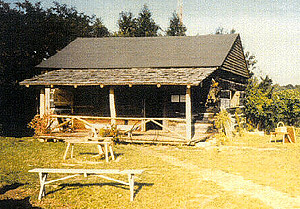
cabin

I have found this can be a tricky area for teachers who are history novices because the word frontier can mean different things depending on the time period that is being covered. Several years ago a colleague of mine once remarked, “You know, EHT, I don’t know as much as you do about history so I feel fairly safe with the content as long as I stay in the text page by page.”

I saw her point. I would have to do the same thing if I suddenly found myself teaching math. Staying with the text can get you into trouble, though, and here’s why.

Generally a unit of study regarding the formation of our government is taught after the American Revolution followed by the settlement of the frontier.

My colleague came to me one day and said, “Who picked out this text? It’s useless.”

“Why?” I asked.

“Well, I started looking at the lesson about the frontier and it doesn’t have any information about sod houses, the prairie, or the early railroads. What are we going to do?” my colleague wailed.

Gently I told her she was thinking about the wrong frontier.

Even as I did my research this week I came up with many different time periods when I googled frontier. I can see how people could easily get confused.

The frontier in early America changed every few years as settlers became crowded and moved to the outer regions. Folks were moving across the Appalachian Mountains before and during the French and Indian War. That was the first frontier, and it existed several years before the settlement of the Great Plains that brought us tales of buffalo, sod-busters, and cowboys.

What can also add to the confusion not only at the elementary level but can confuse upper level students as well, is we tend to touch on settlement across the Appalachian Mountains as we begin the French and Indian War and we touch on it some more at the conclusion of the war with the Proclamation of 1763 issued by King George III which stated colonists could not settle the lands west of
the Appalachian Mountains. The British intended to hold this area for the Native Americans but also meant to move the boundary line westward as white settlement forced it to move.

We then jump headlong into the American Revolution forgetting about the settlers we’ve left dangling out there across the mountains. After the conclusion of the Revolution and a discussion about the formation of our government we then expect the students to turn their attention back to these settlers who crossed the Appalachians.

This situation is definitely one where I feel a teacher needs to depart from the text program and discuss the back county (deep inland settlements towards the mountains) as well as the crossing of the Appalachian Mountains during and at the end of the American Revolution. In this way it remains in context with events such as the Wilderness Road which Daniel Boone was establishing as early as 1775 , the Treaty of Fort Stanwix (1768), and Sycamore Shoals (1775) which began settlement in what would become Kentucky.

In February, after we completed our examination of U.S. government, I asked my students to tell me what they thought of when I said the word frontier. I wrote the word on the board to give them a visual. Some of the responses were buffalo, cowboys, trains, prairie, and covered wagons.

Clearly there is some confusion regarding the word frontier. People tend to think about the Wild West in connection to the frontier because it was the last frontier Americans settled here in the contiguous United States.

I usually make my point by drawing an outline map of the United States on the board. I add in the Appalachian Mountains and, I sketch in where the Mississippi River would be. I ask students, “Where did the Europeans begin to settle first?”

“Along the coast,” they decide.

“And then what?” I prod.

Students proceed to tell me that the settlers eventually crowded up in the first settlements and, they began to move inland. We had already learned a vocabulary term for the inland area and I remind students that their text called this area the backcountry. I share with them further that the word frontier can also describe this land. The land at the edge and beyond a settlement is known as frontier.

As we ended our discussion about the term frontier one of my young men raised his hand. When I called on him he stated, “I know what the final frontier is.”

I fell for this hook, line, and sinker, “Really, what is it?”

My young man reeled me in, “Space…that’s the final frontier.”

Clearly this sweetie watches a lot of Star Trek.


Remember that you can subscribe to this blog and receive my updated posts in your email box by submitting your email address in the Feed Blitz box at the top of this page or use the Bloglines button to the right. Thanks in advance for your comments!