Wednesday, October 24, 2012

The Tale of the Red River Raft


I love the story of the Red River Raft for several reasons. 

First the name...you might see in your mind's eye images of pioneers racing down a river with all of their earthly possessions stacked on a hastily fashioned wooden log raft, but that's not what this story is all about.  

In fact, the story involves the INABILITY to move on a river.

Yes...this story is not what you expect, and if you spend any time around here then you know I like the unexpected change-up in content.

This story also embraces a bit of historical myth... which again....if you spend any time around here reading my meager little offerings you know I like to bust those myths as much as possible, but in this case....it might be okay to include the myth with the lesson content as a hook to draw students in. 

This story also has geological and geographical implications  and a bit of science. It spans several historical eras including Native Americans, pioneers, and the transportation age...and some interesting characters as well. 

Known as the great raft, it was actually a gigantic log jam. It was a huge "raft" that clogged the Red River and ran for 160 miles.

Now at this point I'm sure you are asking yourself.....What in the heck could cause this thing?  I was asking that very thing myself.

It seems the flood rivers of the Mississippi River engulfed the smaller Red River forcing large amounts of driftwood upstream....over thousands of years a log jam formed comprised of cedar, cypress and petrified wood.

In 1806, President Thomas Jefferson assigned Thomas Freeman and Peter Custis to explore the southern Louisiana Territory. President Jefferson ranked their trip second only to the more well known Lewis and Clark Expedition. Freeman and Custis discovered the log jam north of present day Natchitoches, Louisiana and described it as "so tightly bound a man could walk over it in any direction." It covered the width of the river and went to the bottom. 

You can find out more information regarding the expedition here and here.     

See the map of the expedition below:


The first effort to clear the river came in 1833 when Captain Henry M. Shreve of the U.S. Army Corps of Engineers used a new invention Shreve had contrived called the "snag steamboat" to pull the logs out and send them floating downstream. The boats had and interesting nickname..."Uncle Sam's Tooth Pullers". These boats were not just used to clear the Red River Raft. They were also used to clear snags along the Mississippi and other major waterways.

It took three years to clear approximately 70 miles of the river, but by 1839, the raft had reclaimed much of what had been cleared.


One scheme after another followed for the next 32 years trying to free the Red River Raft. Some resources report the government spent over half a million dollars to remove the log jam.

By 1872, Lieutenant E.A. Woodruff, an Army engneer tried his hand at attacking the log jam. He used Shreve's snag boats, but added other boats as well including boats outfitted with saws and boats with cranes to eat away at the edges of the raft. 

This link tells a bit more regarding Lieutenant Woodruff's work, and how he met his death. 

Eventually, another tool was utilized as well when the boats couldn't untangle the logs... nitroglycerin.

Yes, what they couldn't untangled.....they just blew up.

To keep the log jam from reforming the crews dug reservoirs, dredged the main channel and constructed dams.


By 1900, the Red River was permanently opened for trade from the Indian Territory to the Gulf of Mexico. 

Now the story takes a little turn of the bend to the former port city of Jefferson, Texas....a town along the Red River described as the westernmost outpost on the river. The town actually spread out along the banks of Big Cypress Creek.

The log jam existed when the town formed, and in their case the log jam actually helped them. The logs made the water level rise in the Big Cypress Bayou at Jefferson and permitted commercial riverboat travel, and of course....Jefferson became a very important port in Texas between 1845 and 1872.

The town reached its peak right after the Civil War when the population rose to 7,297 people. The town's history page states....The years after the Civil War became Jefferson's heyday with people coming from the devastated southern states seeking a new life. In 1872, there were exports in the thousands of dry hides, green hides, tons of wool, pelts, bushels of seed, several thousand cattle and sheep and over a hundred thousand feet of lumber. For the same period, there were 226 arrivals of steamboats with a carrying capacity averaging 425 tons each....Hotel registers from the early days indicate some very important folks moved through Jefferson including Ulysses S. Grant, Oscar Wilde, and Rutherford B. Hayes.

Today...the population is a paltry 2,024 per the 2000 census.

So, you might be asking why the decline?

At this point of the story we need to bring in Jay Gould, the railroad magnate. Mr. Gould came to town wanting to bring the Texas and Pacific Railroad through Jefferson. One version of the story goes that Jefferson's town leaders would have nothing to do with the newfangled railroad because they were happy with the river traffic. They turned down Gould's offer to purchase the right-of-way, and the Texas and Pacific line did NOT go through Jefferson.

Gould is said to have not been happy when the folks in Jefferson turned him down, and there is a popular story...JUST a story some say....that Jay Gould announced the grass would grow in the streets of Jefferson since they turned their backs on his offer. It is said he wrote in the register of the Excelsior Hotel that the refusal to accept his offer would mean "the end of Jefferson." There is also a story concerning the fact he gave assistance to those removing the log jam which eventually caused Jefferson's decline as a port city.

There are those who say Mr. Gould never did such a thing mainly because he didn't own the railroad until the late 1880s, and he wasn't in Jefferson until later either, but it does make for a good story.

Many  people also point to the fact that the town attempted to build its own railroad from Shreveport to Marshall in 1860, but only 45 miles was completed before the outbreak of the Civil War. Folks argue the town couldn't have been against the railroad since this attempt was made.

Most amazingly considering how they protest the story isn't true, the city of Jefferson capitalizes on the story.   It seems they have Jay Gould's personal rail car.....The Atalanta....on display and own it outright.


No matter which version of the story you go with it cannot be denied that the destruction of the Red River Raft, and the rise of the railroad caused the city of Jefferson to decline,

...and what we are left with is a great story to craft lessons in order to share this information with students!

Tuesday, September 25, 2012

Movie Review: Lawless


I went to see the move Lawless the other night and was quiet pleased.  A friend recommended the movie to me and told me I would like to see it because it was just MY THING.

Well.....it was MY THING and more....mainly because it is real history based on true story.  

The movie is based on the book The Wettest County in the World that has been aptly described as a fictional account of a very real time.  Matt Bondurant, the author, writes of his family including his grandfather....the main characters of the book.... and calls his work a parallel history using family stories, archival records, news clippings and court transcripts.

The movie is termed a gangster film and to a certain extent that's a correct description.....The movie opens in 1931 when the three Bondurant boys are making and selling moonshine in Franklin County, Virginia.  While violence is just part of the business things get dicey when a corrupt lawman wants a cut and the Bondurant boys don't want to play.  Apparently, making moonshine was a huge business......hence the title of Matt Bondurant's book.....because it's estimated that 90 people out of 100 were making moonshine or had some connection with the making of it in Franklin County.

Of course, the Bondurant boys were breaking the law....but while watching the movie we don't really care.  In this instance they are the bad boys girls seem to like and root for.

The movie stars Shia LaBeouf and one of my new favorite leading men....Tom Hardy....who plays the seemingly invincible Forrest Bondurant.    I'm seriously thinking I need to hunt through Netflix and view some of Hardy's other cinematic offerings.....if you know what I mean.  


Violence?  Yes, the movie is full of it....so was the book, but the moonshine business  was a violent business after all.  The book....reviewed by Lauren Bufferd at BookPage mentions the book is "extremely graphic, with multiple descriptions of physical injury, brutality and sadistic behavior."

The movie is rather graphic, too.

One of the events the movie mentions but doesn't go into any detail about is the Great Franklin Moonshine Conspiracy trial of 1935....with good reason.

Per this article the conspiracy began....in 1928 when then Franklin County Sheriff Peter Hodges divided the county into districts and assigned a deputy to each district.  The deputy's job was to enlist people to operate stills and then collect protection money - $25 per still, $10 per load of whiskey and $5 for a filing station.  

And while folks like me and historians....want to write scholarly works on the subject the fact of the matter is they can't because many of the court documents regarding the conspiracy is missing.

This article states.....But the events of the 1930s have produced no scholarly study, in part because court files and the official trial transcript inexplicably disappeared in the 1950s.  Finding the missing documents has become the personal mission of T. Keister Greer, A Rocky Mount lawyer who retired  last year after practicing 42 years.   Greer, 69, has written to the survivors of the attorneys involved in the conspiracy trial, scoured court records and searched state archives.   He even sifted through 100 boxes containing the personal papers of the Judge John Paul, who presided at the trial.  The last reference to the transcript that Greer has found is a 1945 notation that the document was wired to the clerk of the U.S. District Court in Harrisonburg.  "Then," Greer said, "it simply disappears from the face of the earth.".....Greer said a review of the trial transcript - prepared for the appeal of one defendant - could shed new light on the conspiracy trial and on a subsequent trial for jury tampering.

You really have to wonder......what happened to those court documents and why?

A really talented teacher might want to build a mini-unit around the Franklin County experience with Prohibition and include a mystery lesson component surrounding the court records.

The book is reviewed here.

Rolling Stone reviews the movie here.

Wednesday, September 19, 2012

Historical Hats


I began my morning yesterday realizing I had a few things to do that didn't have anything to do with any of my goals or work....making appointments for others....finding paperwork for others....washing clothes for others....and thinking about two or three projects I needed to finish up for others.

It's not that I mind doing these things...hardly.  I like to help, but more and more I find my day is full doing a list of things that don't have anything to do with a table of contents I must flesh out, articles to write, and seeing writing opportunities......or at least answering the emails when the opportunities seek me out.

Just a normal day for me as I grew more frustrated by the minute, but this time my thinking and my realizing left my brain, moved down my arms and out my fingers to a Facebook status that said, "I wear too many hats that aren't mine...some by misguided choice, some that are inherited and some are foisted upon me.  I'm going to stop.  Take your friggin' hat and wear it yourself....'

Later, while I was working out at the gym I thought about my status, and then my mind wandered to hats in general.

My first introduction to hats was at Greenbriar Mall west of Atlanta when I was five or six.  Mother frequented  Rich's department store....an Atlanta mainstay....quite often.   Well, actually......very, very often.  She knew most of the clerks by name, and they knew her, too.    I can close my eyes and actually walk around the store in my mind I was so familiar with the layout.  

Right in the center of the store were the escalators with the bakery on one side and the hat department as well.  Every now and then if I caught Mom in the right mood she would give the clerk a smile, and they would let me sit down at the table and chair in the hat department and try on a few. 

I generally went for the flimsy, wide-brimmed pastel creations...but secretly I really loved the veiled concoctions.   At the time I just knew I liked them....now I know I liked them because they were deliciously sexy...add in a pair of matching leather gloves you can only remove by unbuttoning five or six covered buttons, and.....

Oh my....


In another life I had to have worn hats....I MUST have....and mourn the fact that they just aren't worn that much anymore....at least not in the circles I travel.  

I turned away from my hat desires to think about other hats....hats in history.

Historical hats....

There had to be some.....right?

Earlier this year the Victoria and Albert Museum had an exhibit regarding hats.  Of course, since the exhibit ....a collaboration between the museum and Stephen Jones....was in Great Britain the collection included hats belonging to former queens including Queen Victoria and Queen Elizabeth The Queen Mother.

When we think of Queen Victoria we tend to think of a rather large aging lady in black as she spent the last several years of her life mourning the passing of her husband, Prince Albert, but for many years she dressed very colorfully including fancy bonnets.  The collection at the Victoria and Albert Museum included a bonnet from the 1840s....a construction made of plaited horse hair and salmon pink ribbon.   You can just make it out along the bottom half of this picture.  


The beige tulle and lace hat worn in the late thirties by Queen Elizabeth The Queen Mother was also in the collection.   She wore the hat for a series of well known photographs taken by Cecil Beaton on the grounds of Buckingham Palace.  
Turning towards American History the most iconic man's hat would have to be Abraham Lincoln's use of the top hat.  Lincoln was already a tall man.  It is said he was taller than most no matter where he went, so wearing a top hat was like a six foot woman deciding to wear five inch heels.  

This hat is the one President Lincoln wore on the last night of his life...April 14, 1865.  It's on display at the Smithsonian Institute.  


My research indicates President Lincoln bought this particular hat from J.Y. Davis, a Washington hat maker.  Notice the black silk band....Lincoln had this added to the hat in remembrance  of his son Willie.  

Following the assassination the War Department took possession of the hat and other items left behind at Ford's Theater.  From there the hat became the property of the Patent Office and later was transferred to the Smithsonian where it has remained.  In those days the employees of the Smithsonian Institute were instructed not to exhibit the hat and not to mention that it was there because of the furor it might cause in those early years following the President's death.

The hat remained in a basement storage room for almost thirty years before it was finally displayed in 1893 when the Lincoln Memorial Association borrowed the top hat for an exhibition.  

Of course, today....it's one of the most popular artifacts of American History the museum owns.

Unfortunately, another iconic hat in American History is also connected to an assassination ....the Kennedy assassination.

The American public was first introduced to the pillbox hat during the Kennedy inauguration.

This article states:

[The hat was] a fawn-colored domed pillbox created by a then unknown 29-year-old named Roy Halston Frowick.   The hat sat tilted toward the back, nearly doubled the size of her head, frankly, and creating a pretty contrast to her striking dark looks.  She was nothing the country had ever seen.   A fashionable, beautiful and highly cultured First Lady, one who not only spoke fluent French but effortlessly shopped in Paris and New York.   Across the country, women unanimously agreed:  This young woman was their new fashion icon.  For his part, Halston had no idea what was coming.

Jackie Kennedy also wore a pillbox hat on that fateful date in Dallas, Texas.


The pillbox hat First Lady Jackie Kennedy wore the day her husband was assassinated is as iconic as the pink suit.  

This article from 2011 advises the suit was turned over to the National Archives, but the hat is missing and remains missing to this day.

Somewhere inside the hospital [that fateful day in Dallas], the hat came off.  "While standing there I was handed Jackie's pillbox hat and couldn't help noticing the strands of her hair beneath the hat pin.  I could almost visualize her yanking it from her head," Mary Gallagher, the First Lady's personal secretary, who accompanied her to Dallas, wrote in her memoir....

The pink suit, blood-stained and perfectly preserved in a vault in Maryland, is banned from public view for 100 years.  The pillbox hat...is lost, last known to be in the hands of [Gallagher], who won't discuss its whereabouts... 

....[At some point following the assassination], a box arrived at the National Archives, where such treasures as the Constitution and the Bill of Rights are kept.  In it were the suit, blouse, handbag, shoes, and even her stockings, along with an unsigned note on the letterhead of Janet Auchincloss, Jacqueline Kennedy's mother:  "Jackie's suit and bag worn November, 22, 1963.

No hat.

One has to wonder about the  hat.....

Ah.........yet another mystery in history.

Sunday, September 16, 2012

A Business Degree Is Always a Smart Choice

I've always advised students you can't go wrong with a business degree.   It gives you several ways to go with a career and employers always like to see a candidate with a business degree.   

Lots of different people have business degrees such as Danny Glover, John Elway and Trisha Yearwood all have business degrees.   Lionel Ritche and Kevin Costner do, too.   


Via: DeVry University

Friday, September 14, 2012

Monday, September 03, 2012

Facing the Past


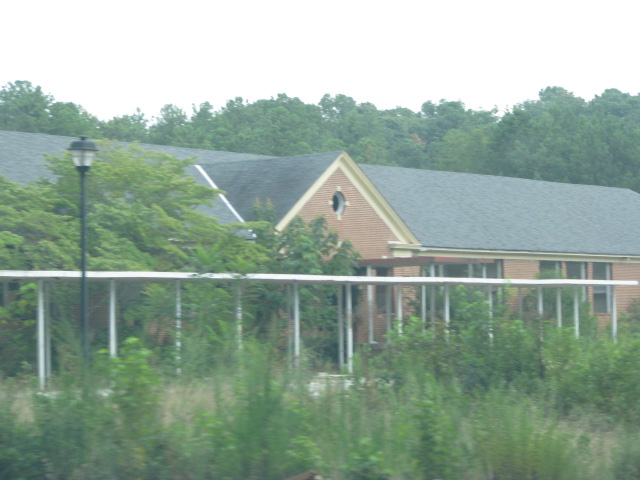
A year ago I took a short ride to my former elementary school   We had heard the school was in a state of demolition having finally been abandoned by Fulton County.  After the county stopped using the building as an elementary school and then as a police officer training facility and then as a place to store voting machines...they just packed up and left it....all alone.

The last lesson had been taught, the last kickball kicked and the last lunch tray washed years and years before.

During the summer of 2006 I visited my old friend....my elementary school....and she was looking pretty good.   A little tired and worn out, but holding her own.  You can read about my visit back then here and see a few pictures I posted. 

However, once the building was abandoned....she took a turn for the worse.  It wasn't long before the roaches and the vermin took over...and I don't just mean the kind that crawl on four or more legs. 

Crack addicts, vagrants looking for shelter broke in.....all of the copper pipes were taken as well as fixtures of any value and old glass....doors and transoms....the very tall windows.....the types of things "they don't make like that anymore."

And at some point the community...if it can be called that....began using my school as a dumping ground.  Quite frankly, I can't call my old community a "community" because how can you treat an old building....a school that was so integral to the community for so long.....like this?


The playground was no better.


A slow...agonizing death.

You can't even drive up the driveway anymore because of the junk.   The state of the building took my breath away....


It was hard to climb those steps...the same steps I sat on as a child waiting to be sorted out for kickball teams.

.....and of course by climbing those steps I was confronting the past.


We walked the hall...the oak hall that had gleamed because James, our janitor always had the floor buffer out and working away.  

I though about that as we traversed the hallway...a hallway now littered with insulation and torn ceiling tiles...piles of trash....torn up pieces of sheet rock.  At some points along the hallway we were literally tottering on piles of debris and very uncertain as to what was underneath.....even if anything would be underneath to support us.

I walked by doors I had opened and closed as a child...and transoms now broken.


There were huge holes ripped out of the flooring revealing the dark underbelly of my school....a building that had always been safe for me, but now....was quite dangerous as we gingerly walked down the hallway.


We have to face our past sometimes...the good and the bad...just like we have to face an unknown future.  There are holes.   We might get around them....some of them we fall through.....but the holes are inevitable.   Some of us get stuck in the holes....some of us eventually climb out and forge ahead to the next pile of debris or inevitable hole.

For all the joys of life..and are there many.....there will be debris.....there will be holes.

A whirlwind of events swirled around my head as I kept going down the hall.  

Why didn't I notice him more?

Why did he die at such a young age?

Where is she now?

That was so important to me then...when did it change?

This is what is left of my fifth grade classroom...the first year I had a boyfriend....a boyfriend who actually returned my feelings.


The back parking lot where I planted flowers and other plants during my fourth grade year....you would never know that now.


My first grade classroom...the room where I read about Alice and Jerry and their little dog Jip......where I poured over Richard Scarry's Busytown books and had to sit still for math.  


The walkway...now overgrown where I sat as a child waiting on my mother to pick me up.


As we drove away I whispered goodbye and took one last picture.


 I won't go back.  Ever.  It's too hard to see what my school was allowed to become. 

I'm content with my memories, but I know deep in my heart I'll continue to wrestle with my questions because apparently I've reached that season of life.....

But it is hard facing the past....good and bad.

It always is....

I'm ready for the season to change.


Sunday, August 12, 2012

Giving a Nudge to Vargas and his Nose-Art

Cute Young Man approached my desk rather gingerly because he knew he shouldn’t be up.
 
First, since it was our “silence is golden” time – that time I allotted on the plan book during the week for students to read aloud anything they wanted to from my classroom library, so he shouldn’t have been out of his seat since I had already given everyone a chance to choose their reading material, and we had already rotated through the restrooms.     

Secondly, since I read something during this time as well……I really didn’t like being interrupted.

Cute Young Man whispered, “Elementaryhistoryteacher, I need to ask you something.”

Hmmm….that was obvious since he was standing beside me during “silence is golden” time, but I decided not to mention that and said, “What do you need, Cute Young Man?”

He had a book in his hand….not one of mine, but it didn’t matter.   Students could bring items from home to read.   The important thing was that my students  were reading, and they were silent.

The book appeared to be an older edition of something dealing with World War II.  Cute Young Boy put the book up on my desk and said, “Look at this…..”

I quickly scanned both pages containing all sorts of images, and then I zeroed in on what he wanted me to see.  

There were several pin-up pictures on the page.   Thankfully, the women were all dressed but there were several of this type:


And there were a few planes with the same type of artwork on the nose area like this:


I explained to Cute Young Man best as I could what he was looking at with the most PG explanation I could find.     More than likely at his age he had already seen an issue of Playboy or Penthouse……..but I certainly wasn’t going there at all. 

Many bombers and fighter planes with the United States Army Air Force were painted with ‘nose art” or mascots during World War II.   It was unofficially permitted since many of the drawings depicted women who were barely clothed or entirely naked.   The "brass" pretended to look the other way in most cases.

Many of the drawings were done by crew members themselves or copied from men’s magazines.  Actresses, girl friends, etc. were used for models.

Calling these women depicted on the planes as mascots may seem a little demeaning today…..feminist groups during the Gulf War had such drawings banned….., but during World War II, the drawings were considered lucky charms, and as the war wore on many crews had little rituals and procedures they went through during each mission to ensure they made it back to base safely.  They considered the ‘nose art’ on their plane to be part of their “luck”.

The drawings in the two pictures I’ve provided above are both by Alberto Vargas.    During the war he was already known as a successful magazine and poster artist.   As far back as the 1930s he had made a name for himself creating pastel portraits of many famous Hollywood stars.

Vargas eventually signed a contract with Esquire magazine where he produced a monthly pinup in 1940, however, his contract with the magazine required he drop the final “s” on his name, so his artwork can be found under the name Varga, too.     During the course of the war through 1945 Vargas produced a pinup each month.  The artwork ended up in the hands of millions of servicemen who received the magazine for free.

The Vargas pinups are very distinctive.  The models do wear clothing, but the girls are very erotic, and are always featured on a white background.      The eroticism made Vargas’ work and Esquire magazine hit the top of the censorship list later in the war.

Many servicemen wrote Vargas asking him to produce ‘nose art’ for their planes.   He rarely turned the men down.

Today, the The Spencer Museum of Art houses almost the entire body of graphic art produced by Vargas for Esquire.

You can find more images of ‘nose art’ and how these images are trying to be saved here at  Save the Girls, however…..and I should not have to say this, but I will…..I would not share these images or Vargas’ artwork with my young students.

Wednesday, August 08, 2012

13 Olympic Controversies through the Years


When you begin to look into the number of Olympic controversies it’s a little surprising how many exist considering the purpose of the Olympic Games happens to be  goodwill, peace and reconciliation.

One of the most recent controversies caught my eye a few days ago….a controversy involving one of the most tragic events that have ever occurred during the Olympics…..the massacre of 11 Israeli athletes during the  Munich Games in 1972.  

Since that time the families of the slain athletes have tried in vain to get the International Olympic Committee to recognize the athletes who were killed during the opening ceremonies.
 
This year….the London Games……were no different.   This article from Sports Illustrated gives a little background and discusses the fight the families continue to lay at the feet of the International Olympic Committee.

Since the Sydney Games in 2000, Israel has organized a commemorative event , but the families think the International Olympic Committee should organize the event.

I see their point.  

One of the wives is quoted as saying, “They were killed on Olympic soil and the appropriate place to recognize them would be the Opening Ceremony.”

A ceremony held by the current International Olympic Committee was authorized by IOC President Count Jacues Rogge in the athlete’s village on the Monday before the opening ceremony…but the event was too low key and did not satisfy the families.

It would seem the Israeli controversy will continue until the families are satisfied.

I can’t say that I blame them.

Here are some other controversies through the years…..

2.  In 1908 the issue for the Olympics involved a flag flap.   The Grand Duchy of Finland had become independent from the Russian Empire, but was not allowed to fly the Finnish flag.  Also, Ireland participated in the games in the areas of field hockey and polo, but was not allowed to fly their own flag. 

3. American athlete Jim Thorpe was at the center of one of the controversies during the 1912 Olympics.    Once it was learned he had played professional minor league baseball he was stripped of his gold medals in the decathlon and pentathlon.   As a show of solidarity the silver medalist in the decathlon, Hugo Wieslander, refused his medals when they were offered to him.   Thorpe’s medals were finally restored to his children in 1983.

4. The controversy in 1920 involved the place selected to hold the games.   Budapest had initially been chosen but due to the fact the Austro-Hungarian Empire had been a German ally in World War I, the International Olympic Committee transferred the games to Antwerp.   I wonder if the fact the IOC that year was heavily dominated by the French had anything to do with it.   Hmmm….

5. Making clicking noises to a horse was one of the controversies de jour in 1932.   Swedish equestrian Bertil Sandstrom won the silver in equestrian dressage, but was demoted because he had “clicked” encouragement to his horse.     Sandstrom argued unsuccessfully that his saddle made the noises.

6. The entire 1936 games held in Berlin could be deemed controversial since they were held in Berlin and are considered “Hitler’s Games”, however, one of the highlights included the French and Canadian Olympians and their salute during the opening ceremony.   It appeared to some they were giving the Nazi salute, but in actuality they were performing the Olympic salute, which is similar.  Both salutes are based on the Roman salute.

7. The 1948 Summer Olympics following World War II provided a little punishment for Germany and Japan as both countries were suspended from the Olympics.   The suspension would last until 1956.

8. Boycotts were the order of the day for the 1956 Summer Olympics.   A total of seven countries boycotted the games all for different reasons.   The Suez Crisis kept Egypt, Iraq, and Lebanon out of the games, and France and the United Kingdom were upset after Egypt nationalized the Suez Canal.   The Netherlands, Spain and Switzerland boycotted in protest of the Soviet Union because they had invaded Hungary, and the People’s Republic of China was upset that the Republic of China/Formosa was even allowed to compete.

9.. Apartheid kept South Africa from the games during the 1964 Summer Olympics.   The IOC would not lift the suspension until 1992.

10. The “Power to the People” Olympics better known as the 1968 Summer Games became controversial when Tommie Smith and John Carlos performed their “Power to the People” salute………..a raised fist…….during the United States anthem.   Both Smith and Carlos had won medals in the 200 meter race.

11. The 1976 Summer Olympic controversy involved the fencing portion of the pentathlon competition.   Soviet Boris Onischenko used an épée which had a pushbutton on the pommel.  When the button was activated it would cause the electronic scoring system to register a hit…..sometimes incorrectly.  The entire Soviet pentathlon team was disqualified.

12. The French version of “the finger” was at the heart of a controversy during the 1980 Summer Olympics.   Wladyslaw Kozakiewicz, a Polish pole vaulter, used the bras d'honneur gesture when he became upset with Soviet officials who he felt was cheating.   The officials were  opening the stadium doors during his attempts to allow a disturbing flow of wind.    The gesture he made created a huge scandal and he almost lost his medal.

13.  During the 2000 Summer Olympics a Chinese gymnast by the name of Dong Fangxiao had his bronze medal taken away in 2010.   It was discovered that at the time she competed she was only 14 years old…..the rules call for participants to be at least 16.  The US women’s team for 2000 moved up into third place and received bronze medals…..ten years later.

Now if you noticed at some point my list begins to just be about the Summer Olympics.    This doesn’t mean there only controversies during the hot summer.   

Hardly.

There were controversies in the Winter Olympics, too…..

Stay tuned…..I’ll try to get to those before the closing ceremonies for the London Olympics.

Tuesday, July 17, 2012

Fruithurst, Alabama....an Example for Boom and Bust


Boom and bust – basic social studies vocabulary words, right? 

Think about how you learned these words.   I would imagine you were taught about boom and bust during an exploration of the Gold Rush, right?

Most everyone is….and that’s my point. 

Are there other situations where the terms boom and bust could be used? 

Of course there are, and recently I stumbled across one that I found really interesting via a friend.  

Let’s examine Fruithurst, Alabama – a rural little hamlet near the Georgia border in Cleburne County.   As far as population goes most elementary schools have a larger student body than Fruithurst’s total population.  The 2000 census indicates the population tops out at a whopping 200 people. 

If we transported ourselves back to 1890 and the area where Fruithurst is located we might be lucky if we found 200 people. In fact, the area wasn’t even known as Fruithurst in 1890.   The area was first known as Summit Cut and later Zidonia (pronounced “Zildonee”) by Scotch-Irish farm families.

Things began to change, however, in 1894 when a company known as the Fruithurst Company bought up large holdings of land and many of Scotch-Irish moved on to other areas.    The company was formed by a group of Northern entrepreneurs who envisioned transforming a portion of Alabama’s piney woods into a winemaking region.

Yes!   A winemaking region.

Per Wayne Ruple who wrote the book Cleburne County the Northern businessmen had several goals, but the main one had to do with creating the second best vineyards in the world
.
Most of the investors were from the Chautauqua grape belt in New York state like Garrett Ryckman of Brocton Wine Cellars.   E.B. Hammitt & Co. promoted the land.   Per Thomas Pinney in A History of Wine in America:  From the Beginnings to Prohibition, the New Yorkers wanted to promote immigration to the area and to develop fruit growing through a cooperative scheme.

The town name – Fruithurst – came about through a contest the organizers held.   One woman was the lucky winner of $25 for coming up with the name.

Part of the scheme involved encouraging immigrants from Germany, Sweden and even Hungary.  Every man who bought ten acres of vineyard land was given a lot in the town, its location determined by the type of house he planned to build.

The developers laid out an ambitious “model city” with intricate diagonal streets instead of the usual checkerboard pattern.   Promoters planned everything….even where the flagpole would go…..and right behind the flagpole was the Fruithurst Inn, a large hotel built for $40,000.   The building had 3-stories, 80 rooms, a billiard room, bowling alley, and barber shop as well as central steam heat.

Virginia Voss Pope advises in Fruithurst, Alabama’s Vineyard Village…..Promoters and investors began to arrive so fast during this time that homes could not be constructed rapidly enough to meet the demand and many of these new arrivals had to be put up as borders.
It only took four years for Fruithurst to become a real boomtown with 800 residents from around the nation….many from Minnesota… and Europe per Ruple.  

Over 3,000 acres were planted with over 100 varieties of grapes. Various fruit trees were also planted including plum trees.   Several packinghouses were built and dozens of pickers were hired making thirty cents a day.

Ruple advises the yields were staggering.  One vineyard produced 8,324 pounds of grapes in a single year…..23,000 gallons of wine were produced in 1898.

It really looked like the Northern entrepreneurs had achieved their goal….making Fruithurst the location for the second best vineyards in the world ……..especially when a French winemaker called the Fruithurst product “the best wine [I have] seen in the South.”

However, the boom was not to last.

The vine market slumped, native vine diseases attacked the more familiar northern varieties, and a severe winter and national Prohibition helped close the wineries in 1919 per Ruple. 

The colonists found out they were selling their grapes to Northern markets at a loss, a lumber mill showed no profit, an excelsior mill and two wineries burned and most importantly state prohibition spelled the doom of the wine-making industry.  

Discouraged by these failures and unable to adapt themselves to changed economic conditions a general exodus began and eventually the property was liquidated at a sheriff’s sale.

This link takes you to page 41 of Wayne Ruple’s book….Cleburne County……where there are several pictures of the town during its heyday including homes, vineyards, and the Fruithurst Inn.   The pictures are very interesting to look at.

Over the last few years the vineyards are beginning to return to the South including the land around Fruithurst.......

I think it would be very interesting to focus on the Fruithurst story in the classroom due to the Prohibition angle as well.  Most students are taught about Prohibition as it related to the 1930s, but here in the South the years before and after the turn-of-the-century involved the Temperance Movement and Prohibition locally long before the national movement took hold.