Showing posts with label Personal. Show all posts

Monday, August 18, 2014

Yes, I've Published a Book!


I've written and published a book!
Of course, that was my intention when I began this blog way back in 2006 when I was still in the classroom, but the book I've published isn't exactly the book I had planned.
The planned project - a teaching memoir - will still be published along with a few other projects, but the book you see to the left is what fell in my lap along the way.
It needed to be done.
History education is my prime focus along with writing curriculum. Over the last couple of years I've written a few college courses used by teacher candidates at Johns Hopkins University School of Education, and I have some other curriculum ideas up my sleeve, but local history has taken a front-burner position over the last year.
I've been researching and writing the local history of Douglas County for the past four years, and have had a weekly column the Douglas County Sentinel for a year and a half.
I've been a longtime fan of the Images of America series of books from Arcadia Publishing. Several towns across the nation are included including several in Georgia, but my town of Douglasville was missing.
When Arcadia contacted me last year, there was no other alternative than to sign the contract and get busy. The book was released on July 14th, and I'm very proud of it. 
The book contains 200 vintage images depicting the history of Douglasville, Georgia some dating back to the 1870s and covering the next one hundred years. 
As far as southern towns go, Douglasville is a bit unique as it IS the quintessential New South town having been birthed in 1875 during Reconstruction
You can Google a preview of the book HERE, and you can purchase it via Amazon HERE.

Thursday, June 06, 2013

Gliding Through D-Day....Part II

A few years ago I paid homage to my Uncle Buck for his service to our country during the very early morning hours of June 6, 1944 by writing Gliding Into D-Day.  Feel free to obtain a little background if you wish by clicking through and reading it first.

My uncle….Flight Officer Cyrus S. Carson…. was a glider pilot.

Gliders were actually the first stealth aircraft used by the military. The Gibson Refrigerator Co. received contracts from the U.S. Army Air Force for the production of CG-4A troop carrying gliders, and was one of 15 companies to do so. Each glider was made up of 70,000 individual parts.  Gibson built over 1,000 of the nearly 14,000 CG-4A gliders constructed during the war.
On the morning of June 6, 1944, Cyrus S. Carson was flying as pilot in command and John Winkler was flying co-pilot in a WACO CG-4A glider similar to the one I’ve posted below. Both men had graduated as second lieutenants from advanced flight training in 1943 from Lubbock, Texas.

A WACO CG-4A glider is pictured below.
 
The mission that my uncle and Winkler flew was serial 2B code name “Detroit” which was a pre-dawn glider borne combat assault in the American airborne landings in Normandy, made by elements of the U.S. 82nd Airborne Division. It was part of Operation Neptune, the assault port of the Allied Invasion of France, Operation Overlord.
Originally slated to be the main assault for the 82nd Airborne, the glider operation instead became the first reinforcement missing after the main parachute combat assault, Mission Boston. The landing zone for Mission Detroit was near Sante-Mere-Eglise, to the west of Utah beach.

The 434th Troop Carrier Group as well as the 437th participated at the same time.
My uncle and Winkler, pictured below, were flying the 82nd Airborne as the other group flew the 101st Airborne. Each group consisted of 52 gliders, making a total of 104 gliders to cross the peninsula of Normandy.


On D-Day my uncle and Winkler were flying glider number 6. Their mission was to carry field artillery and hook up with glider number 5 which had a jeep. Their tow plane was the C-45. The WACO CG-4A was 48 feet long with an 84 foot wingspan and weighed 3,790 pounds empty, 7,500 pounds normal load, and 9,000 pounds overloaded; made of plywood, canvas and steel tubing. There were no flaps, although spoilers above the wing were used to steep the glide.

From my uncle’s own account of the mission he writes, “Every odd numbered glider transported a jeep and five men counting the pilot and co-pilot. Every even numbered glider transported an anti-tank gun, five men and a stack of ammo.
….Our men took a map of the Normandy peninsula and located the beach that the troops would be using to land ashore. Straight across the peninsula on the south shore were [the two Channel] islands named Guernsey and Jersey. The navigator decided that if we positioned a ship about 40 miles straight south, with a spot light point straight up, we could head from England into the direction of Spain and pick up that spot light and go north [and get us in the position regarding where we wanted to land our gliders].

What we didn’t know …was that these two islands were the heaviest fortified places in all of Europe.”
Around 1:00 am in the morning my uncle and Winkler along with three soldiers from the 82nd Airborne took off from Ramsbury, England. The weather was so bad the mission should have been cancelled, but that had already happened once before.

My uncle remembers, “We assembled over England and when we reached the Channel, we dropped down to 100 feet over the water and flew until we found our spotlight, then headed north. As we crossed between the two islands, we could see thousands of shells going up just in front of every tow plane and glider. The only thing that saved us was the eight Air Force P-47s, P-51s, B-25s, and B-26s that flew at speeds between 250 and 275 mph.  We came along at 140 mph and the guns on the ground couldn’t adjust their lead.  Not a single C-47 or glider was shot down.”
They could not see the tow plane, although they could tell if they were high or low depending on which way the tow rope pointed looking out from the cockpit. There is no engine noise, although the glider does make a whistle noise from the various protruding rigging that is exposed to the slip stream.

My uncle continued, “At 2,000 feet over land we were flying in a cloud, solely on instruments. A glider’s instruments consist of keeping the three to four feet of tow rope pointing in the same direction. We were supposed to drop down to an altitude of 700 feet for glider release. We were approximately six to eight minutes from the release point when the C-47 pulling me made an 85 degree diving turn to the left. This caused the rope on my glider to break.”
My uncle’s co-pilot, Wilkerson recollects that something must have spooked the pilot in the tow plane as he ran into a thick cover of clouds.

My uncle states, “I made a driving turn to the right. If I had remained on course, and slowed down to 70 mph, there was a real good possibility that the C-47 behind me, would have collided with the rear of my glider.
I reduced my speed to 70 mph and at about 100 feet I broke out from under the clouds. This gave me a very short amount of time to find a suitable place to land my glider. I selected an open field to my right. This field had one large tree about one foot in diameter.

I positioned my glider so that the tree would contact the center of my right wing, causing the right wing to be shred off and causing the glider to drop about five feet to the ground with enough force to break off the right landing gear. The left side of the glider came down slower and the left wheel remained on the glider. This caused one terrific ground loop. Nobody was injured and the equipment was not damaged.
Glider number 5, carrying a jeep was supposed to join up with us. This would have given us a 10 man anti-tank crew.”

Co-pilot Wilkerson reported that all five crew members were covered with dirt from the glider plowing up the field with the landing gear.
My uncle continues, “With hopes that the crew with the jeep would find us, we hid on a wooden knoll about 900 feet away from where we landed where we had a clear view of the glider. The first thing that came by was a truck load of about 20 German troops.”

Sadly two hours after John and Cyrus landed and while they were waiting next to their glider hoping to meet up with the crew from glider number 5, deputy commander of the 101st Airborne, Brigadier-GeneralDonald F. Pratt landed about 0400. His glider was over-loaded with a command jeep, radio set, and jerry cans of gasoline. In order to avoid stalling the glider, the pilot, Lieutenant-Colonel Michael C. Murphy, came in over the hedgerow at about 90 mph and skidded on the damp grass and crashed head-on into a tree in the middle of the hedge. Murphy survived the crash with two broken legs, although Pratt died in the seat of his jeep with a broken neck.
Pratt was the highest ranking officer killed on D-Day.

At a family reunion a few years before my uncle died he told me about the glider crash that killed Pratt with tears streaming down his face.  He wrote “They overshot the landing field. The Jeep shifted when the glider hit a hedgerow causing it to move forward, severing the pilot, Tom Seward’s right shoulder.  He died instantly. The co-pilot received a broken back. They were surrounded by Germans fairly quickly. The co-pilot was taken to a German field hospital.  All they could do for him was roll up a blanket and put it under his back while lying face up.
Thankfully, the American front line overtook the hospital four weeks later.”

The glider crash that killed Pratt was fictionalized in the movie Saving Private Ryan.
My uncle and his crew waited as long as they could, but the area was full of Germans. I’ve posted a picture below of one of the gliders being inspected by the Germans soon after it landed below. 
At this point my uncle’s crew decided getting back to friendly territory was their prime objective. Unknown to them at the time, there was a total of 8 gliders that landed off course in the same area within about a 2 mile radius of them and there were also two German divisions there at La Chevalerie near Saint Germaine-le-Gaillard.

The men decided to split up with my uncle taking two of the soldiers with him and his co-pilot took the rest.
Immediately upon splitting up Germans were within eyesight.  My uncle explains, “The three of us were in a wheat field close to hedgerow when a truck of Germans entered the same field in a lower corner. I told them that everything takes time, if we jumped up, it would take time for them to recognize us as Americans, it would take time for each one to decide which one of us to shoot and it would take time to aim and fire. In my theory, before they could fire the first shot, we could be over the hedgerow and be gone.

Agreeing with me I told them we would count to three, at the word three, we would go over the hedgerow. On the word three I sprung up, hit my head and right shoulder on the top of the hedgerow, and pole vaulted to the other side.
Going over I saw three rifles come up, but no shot was fired.

I hit the ground running.
In 500 feet was another hedgerow.  I cleared it the same way. 

Then I stopped to let the other two catch up. 
I was surprised to find I was alone.

This meant that the other two didn’t have a second chance.”
My uncle never knew what happened to the two men.  He checked with headquarters as late as September, 1947 and there was no word as to their whereabouts.

Once alone he heads towards Cherbourg.  He spots another glider crew who has set fire to their glider, but they are hesitant to leave because a member of their crew was injured.  After 15 minutes or so my uncle sets off again alone moving slowly as the area is thick with German surveillance.
French resistance fighter, Valentin Lebatard picks him up on the afternoon of June 9th and drops him off with a small group of American soldiers. After 48 hours my uncle sets off alone again

He explains, “Two days later I thought I was three or four hedgerows from the American front line, when a German medic found me. The American medics go into battle with a first-aid kit and a stretcher; the German medics went into battle with a first aid kit and a rifle. I was taken to German headquarters which was about three blocks away where I was interrogated giving name, rank and serial number only.  Apparently the Germans had never heard of the rank “Flight Officer” before.”
While being held at the German headquarters my uncle met up with Second Lieutenant James Bowley.  Per Uncle Buck Bowley had “come ashore on the third day of the invasion at Utah Beach, and had been injured in the right hip by a German hand grenade.   He was just coming to when the Germans searched him finding his pockets full of German insignias that he had taken from dead German soldiers.  

Three hours later they were on a truck….three feet deep with ammo and about 8 German soldiers. The truck was pulling an 88 mm anti-aircraft gun.”
Basically, they were riding in a half-track which is a cross between a tractor and a tank. The ammo the Germans were carrying was shells about 5 feet across and about eighteen inches in length. They could bring down a B-17 bomber at 30,000 feet as the flak from these shells brought down hundreds of bombers during the war.

My uncle and Lt. Bowley knew exactly where they were headed. When the Germans captured Allied soldiers they would march them or transport them to Paris where they would be loaded on box cars for the trip to Berlin and on to a concentration camp deep inside Germany. 
The Germans had their prisoners ride on top of the ammunition. At one section of the road which led to Paris, there was an area that was barren of any hedgerows and trees and was vulnerable since the American Air Corp had orders to not let anything go in or out of this area. When they would see any German vehicle it would be fair game.

By this time, a couple of P-47s were patrolling the road looking for German transports.  One of the fighters made a low pass and came around for the bomb run.
My uncle states, “On his last pass the pilot decided to drop a 500 pound bomb.  The bomb hit the pavement in front of me, dug through the pavement about one foot, rose back into the air clearing the gun and the truck and going about 200 feet into the living room of a French house. The bomb did not explode. We had about 20 minutes of fireworks as all the ammo in the truck exploded.”

Since the bomb did not detonate, the wing-man for the other P-47 was going to finish off the job with a strafing pass. As the fighter made its pass, the half-track was hit with 50 caliber machine gun rounds and it exploded in flames.
The Germans along with their prisoners took shelter at a farmhouse. The location was identified as “La Detrousse” in the town of Saint-Nicolas-de-Pierreport near La-Haye-du-Puits. At some point the German Lieutenant leaves the prisoners with a guard while he and the other men go in search of other transport.

While they were alone the Americans were able to talk more directly with the German soldier and even shared pictures of their families. My uncle and Bowley attempted to persuade the German soldier that they were all just pawns in the war.
Later, when the German Lieutenant returns he orders the prisoners to dig their graves.  The prisoners had become a liability and had to go.  The officer left with the other men and ordered the guard to kill the solders and catch up to them.

The guard took my uncle and Bowley to a bedroom and showed them how the mattresses were stuffed with straw.  He indicated the men should hide in the mattresses and not come out.  
A few minutes later they heard gun fire.  A couple of shots sounded a few seconds apart.

Then quiet descended on the place.
The German guard had left to rejoin his group now that the American prisoners had been “killed.”

My uncle and Bowley hid out on the farm for almost a month with the farmer providing them food and wine.  Around the first of July two French women arrived at the farm accompanied by a B-17 pilot who had been shot down in the area named Kenneth N. Haugard.  By this time my uncle was suffering from a high fever and Bowley’s hip injury was getting worse.
Thankfully within a few days the Americans were in control of the area and the men were had reached their goal – friendly territory.

Once in friendly territory my uncle learned that his co-pilot Wilkerson had also been captured by the Germans, but managed to escape through the hedgerows when a passing American plane distracted their captors.  His group was able to reach friendly territory by July 8th.
This story had had a happy ending because both my uncle and Wilkerson made it back to England in one piece. More than one-third of all glider troops were killed or wounded during the time between June 6th, 1944 and May, 1945.

Both men never flew another mission, although my uncle stayed on as a glider instruction in England as the glider was used in a few more missions including the Battle of the Bulge, the liberation of Holland and the crossing of the Rhine into German. The Army Air Corp glider program was phased out in 1947, although one of the keys to the success of D-Day was the use of the glider.
 
Both men went on to have successful professions after the war.
My uncle, Cyrus S. Carson had a career with Lockheed Martin and one of his jobs was in the photography department. Cyrus retired after 30 years in 1982. An interesting note is that both Cyrus and John built a dark room together in England, and Cyrus used it to make a career profession.

On October 8, 2005 Uncle Buck finally managed to have a reunion with Wilkerson and talk over their experiences.
 
Both men provided interviews with the Palm Springs Air Museum in association with the Veterans History Project of the Library of Congress and their glider experiences during D-Day were included in the book Forgotten Wings by Phillippe Esvelin.


Tuesday, January 22, 2013

Let's Hear It for Local History

Over the last couple of years I’ve immersed myself into a personal local history project involving researching and writing about the history of my home…..Douglas County, Georgia. 

What started as a weekly column here at Douglasville Patch morphed into a blog called Every Now and Then located here. 
I’ve learned several interesting things along the way, met some great people, and kept myself rather busy meeting a self-imposed Monday deadline each and every week……something I’m trying to get back to doing around here at History Is Elementary as well.

One of the things I’ve tried to do in many of my postings is to connect local history to the larger picture of what was happening in Georgia  and in the United States at the same time.
For example, recently I wrote about a couple who moved to Douglasville, Georgia in 1887.  Now in and of itself that’s NOT so remarkable, but the fact that the couple was from Chicago, Illinois caught my interest. Later as I began to get more involved in the research I saw how far reaching the story of C.C. and Helen Wilmans Post happened to be.

Both were journalists.  He could be termed a muckraker actively writing during the reform movement of the late 1800s. I had mentioned him in a post here at History Is Elementary a few months ago.  
His wife, however, got caught up as the self-described founder of “mental science” hawking her “lessons” and books discussing how upon receipt of a fee she could cure patients of various ailments.....a process she described as an "absent cure."

While his wife was busy receiving thousands of dollars a year for her “services”, C.C. Post had become not only heavily involved with local politics in Douglasville, Georgia he also became very involved with third party politics in Georgia via the Farmers Alliance which grew into the Populist Party.  He was known not only on the local stage, but on the state and national stage as well.
The Posts are an interesting study regarding the time period and how folks reacted to them. 

You can access  their story at the following links
Part One…..A Little Background on Mr. and Mrs. Post

Part Three….Mr. Post and Third Party Politics

My local blog has its very own Facebook page where readers can stay advised regarding updates.  You are more than welcome to “like” the page here.

Monday, September 03, 2012

Facing the Past


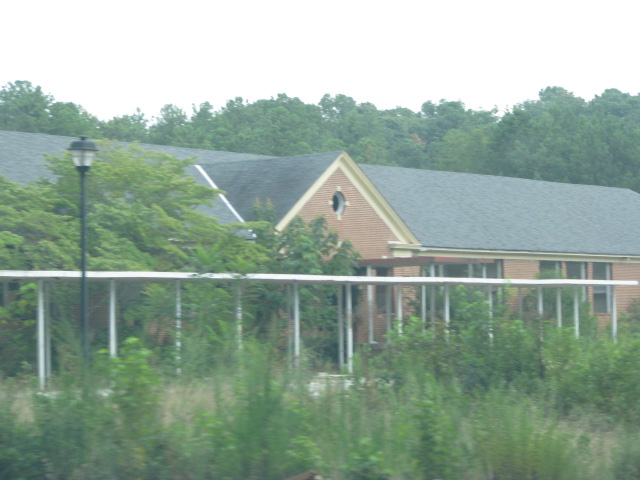
A year ago I took a short ride to my former elementary school   We had heard the school was in a state of demolition having finally been abandoned by Fulton County.  After the county stopped using the building as an elementary school and then as a police officer training facility and then as a place to store voting machines...they just packed up and left it....all alone.

The last lesson had been taught, the last kickball kicked and the last lunch tray washed years and years before.

During the summer of 2006 I visited my old friend....my elementary school....and she was looking pretty good.   A little tired and worn out, but holding her own.  You can read about my visit back then here and see a few pictures I posted

However, once the building was abandoned....she took a turn for the worse.  It wasn't long before the roaches and the vermin took over...and I don't just mean the kind that crawl on four or more legs. 

Crack addicts, vagrants looking for shelter broke in.....all of the copper pipes were taken as well as fixtures of any value and old glass....doors and transoms....the very tall windows.....the types of things "they don't make like that anymore."

And at some point the community...if it can be called that....began using my school as a dumping ground.  Quite frankly, I can't call my old community a "community" because how can you treat an old building....a school that was so integral to the community for so long.....like this?


The playground was no better.


A slow...agonizing death.

You can't even drive up the driveway anymore because of the junk.   The state of the building took my breath away....


It was hard to climb those steps...the same steps I sat on as a child waiting to be sorted out for kickball teams.

.....and of course by climbing those steps I was confronting the past.


We walked the hall...the oak hall that had gleamed because James, our janitor always had the floor buffer out and working away.  

I though about that as we traversed the hallway...a hallway now littered with insulation and torn ceiling tiles...piles of trash....torn up pieces of sheet rock.  At some points along the hallway we were literally tottering on piles of debris and very uncertain as to what was underneath.....even if anything would be underneath to support us.

I walked by doors I had opened and closed as a child...and transoms now broken.


There were huge holes ripped out of the flooring revealing the dark underbelly of my school....a building that had always been safe for me, but now....was quite dangerous as we gingerly walked down the hallway.


We have to face our past sometimes...the good and the bad...just like we have to face an unknown future.  There are holes.   We might get around them....some of them we fall through.....but the holes are inevitable.   Some of us get stuck in the holes....some of us eventually climb out and forge ahead to the next pile of debris or inevitable hole.

For all the joys of life..and are there many.....there will be debris.....there will be holes.

A whirlwind of events swirled around my head as I kept going down the hall.  

Why didn't I notice him more?

Why did he die at such a young age?

Where is she now?

That was so important to me then...when did it change?

This is what is left of my fifth grade classroom...the first year I had a boyfriend....a boyfriend who actually returned my feelings.


The back parking lot where I planted flowers and other plants during my fourth grade year....you would never know that now.


My first grade classroom...the room where I read about Alice and Jerry and their little dog Jip......where I poured over Richard Scarry's Busytown books and had to sit still for math.  


The walkway...now overgrown where I sat as a child waiting on my mother to pick me up.


As we drove away I whispered goodbye and took one last picture.


 I won't go back.  Ever.  It's too hard to see what my school was allowed to become. 

I'm content with my memories, but I know deep in my heart I'll continue to wrestle with my questions because apparently I've reached that season of life.....

But it is hard facing the past....good and bad.

It always is....

I'm ready for the season to change.


Wednesday, May 02, 2012

A Quiet, Simple Life

There are many places I like.    There are a few I love.   Then there are those unique places that I fall in love with and could stay there forever.

Seaside, Florida is one of those places for me.

Seaside, Florida


The minute I enter the picturesque town I feel the creative energy.   I feel the friendliness of the town, and the Victorian charm draws me in.


A fantastic livable space....


It’s just an added bonus that sandy white beaches and the emerald water of the Gulf of Mexico are just mere steps away.


The town was developed in the late 1980s as a modern day Victorian town complete with narrow streets, white picket fences, and lots of pastel colors.   


Many of the dwellings are hidden in gnarled mangroves and magnolias.

Can I stay here forever?

Robert Davis – the man who developed Seaside – revolutionized the concept of town planning forevermore.    The development began as a parcel of 80 acres that Davis inherited from his grandfather.  Instead of wanting to build a vacation getaway and keep others away – as many would have done – Davis decided he wanted to build a town……an entire town.


One of the park area surrounded by shops and homes.

Davis based Seaside on the principles of New Urbanism which includes towns that are friendly to walkers, contain a variety of housing, and encourages many different types of jobs.

To tell you the truth the whole thing reminds me of sitting around with a bunch of friends when you were nine or ten and brainstorming some wild and crazy idea and setting off in a frenzy to make it a real thing, but in the case of Davis…..he really did make his dream a reality including touring small town after small town in Florida to grasp the concepts he wanted to reproduce at Seaside.  

This isn’t a place to have a vacation away from your life…..this is a place to make your life the vacation.

Seaside is filled with several interesting shops.

There are work places and creative places and one of the state’s first charter schools is located in Seaside.  There are places for sports, a spa, and a performance theater.

The building in the middle is in the center of Seaside....it's the post office.


Would I introduce a concept like Seaside to my students?  

Why of course I would.  I’d begin by showing them pictures from my Spring Break and move into the concept of New Urbanism and how Seaside fits the mold.   Then I would allow student brainstorm and let them draw up plans to recreate their town into a place where they could have a simple, beautiful life complete with drawings.  

I think it would a fun and thought provoking activity.
  
What about you?


Just take a gander at the website for the town.
  
Notice the motto……”A simple, beautiful life”.  

Isn’t that what everyone wants?   

Monday, May 30, 2011

Memorial Day and My 800th Post....

I find it appropriate that this post is my 800th posting for History Is Elementary.

Memorial Day is one of my favorite holidays, so it makes sense I’m writing about it again for post number 800. I knew the milestone post was coming up. I had thought about what I would write. I had even asked friends on Facebook what I should write about, and they came up with several interesting ideas. Then I realized Memorial Day was rapidly approaching…..and I couldn’t go without saying something.

What does Memorial Day mean to you? Cookouts, picnics, trips to the beach, perhaps a sale at the mall, time off from work, a cold beer or two, the Indianapolis 500, a slab of ribs on the grill……

Don’t get me wrong. I don’t have a problem with any of those things, but I wouldn’t be the ElementaryHistoryTeacher that I am if I didn’t point out what the original intent behind Memorial Day is.


Yes! These sweet young ladies, two of which I have the pleasure of knowing, have the right idea. Hannah and Claire are the daughters of a couple who are great friends of mine.  Paula and Scott felt it was important to teach their daughters the true meaning and intent of Memorial Day. Their family along with several other people decorated the graves at Marietta National Cemetery where there will be a ceremony today at noon.


I applaud them heartily!

Yes, Memorial Day is the official day to recognize men and women who have died while serving our country in the military.

Originally, Memorial Day morphed from a day that became popular soon after the end of the Civil War that was known as Decoration Day. Not only was it a day of remembrance, but it also served as a day for reconciliation as the North and South tried to heal.

The war dead was remembered by decorating their graves with flowers. On the very first Decoration Day, General James Garfield, future President of the United States, made a speech at Arlington National Cemetery where 5,000 people had gathered to decorate more than 20,000 Union and Confederate graves.

As there are with most things there are a few cities and/or groups who vie for the credit regarding who began the custom of decorating the graves of soldiers…..in the end it only matters that it’s done, right?

Over the years Decoration Day began to include soldiers from other wars and officially the day become Memorial Day when President Lyndon B. Johnson declared the last Monday in May as an official holiday in 1966.

Here are a few more pictures depicting Decoration Day events.


And of course looking back on other Memorial Day postings here at History Is Elementary…..This post is from 2009 and discusses heroes and this post is from 2008 when I was fortunate enough to spend Memorial Day at Arlington National Cemetery.


Whatever you do today......take a few minutes to remember those brave men and women who answered the call gave their lives in the cause of freedom.

Saturday, May 07, 2011

Signs of the Times

I found out this morning in a roundabout way the high school I graduated from will be hiring an art teacher for grades 4, 5, and 6 for the fall. The teacher will be employed full-time and will teach darkroom photography and printmaking to elementary classes.
Yes, you read that right.


Students in upper elementary grades will be learning darkroom photography and printmaking.


First of all, I don’t have to tell you the economic climate of the United States over the last couple of years hasn’t exactly been agreeable to many in the teaching profession. Education has experienced delays with contracts, budge cutbacks, and programs have been pared down or cut out all together. Teachers have been required to take furlough days and in many instances positions have been deleted totally.


Art and music have been hit especially hard in public school systems. Unfortunately, they always seem to be the first programs to go when there are money issues.


I doubt there are very few public schools today teaching darkroom photography and printmaking to any class let alone a class of young children, and of course, one of the main reasons Woodward Academy can afford this “extra” for students is Woodward is one of the top private schools in the Atlanta area.


Still….


What a terrific opportunity to teach what may be a dying art. Bob Smith, a local photographer in my neck of the woods states, “This is interesting …I guess it’s great to expose them to the way [photography] used to be done, but in ten years, they may have to buy the chemicals themselves to do the developing. I wonder what types of film will still be sold in ten years. You have to go to professional photography shops……just to buy old 120 film that went in every camera since World War II…and they have to wait on the manufacturer to produce the next allotment.”


Think about the implications for teaching history by having a darkroom photography and printmaking class. Even our youngest students are familiar with digital cameras. Many are very savvy with the Internet, camera phones and Photoshop. They know modern photography, but by teaching older methods students can learn about the methods of Mathew Brady whose Civil War images still get history students involved directly in the war.


Students can view this image….a street scene by Nicephore Niepce, one of the earliest photographic images from 1826. The method used for this print is called Heliogrgraphy, which means ‘sun writing’. The process took eight hours of exposure time…..notice the light is on BOTH sides of the street.


This image is an iconic one showing the damage from the San Francisco Earthquake in April, 1906 by Arnold Genthe. 

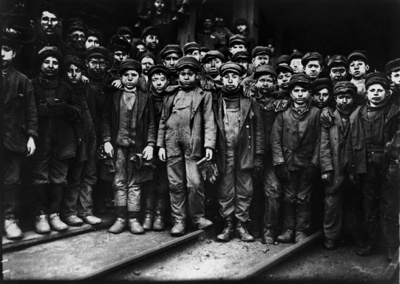
Young students can relate to this image since the age of these young boys is close to their own.  The title of the photo is “Breaker Boys”.   Lewis Hine used his photograph to change life for children all across the United States in 1910.   Breaker boys were employed in coal mines to separate the coal from slate.   Hine travelled the country taking images of child laborers.   Soonafter, a law was passed outlawing child labor.


The next image is the most famous of the four I’m featuring here.   Who hasn’t seen this haunting image of Florence Owens Thompson taken by Dorethea Lange in Oklahoma during the Great Depression in 1936?  It's called "Migrant Mother."


Photography is a powerful way to study history. Images of the past are signs of the particular times we are viewing. We can see how things looked, how people dressed, and how they wished to portray their present for future generations to see.


Historical images are great hooks to draw students in, and what better way to draw them in further than by teaching photography methods that seem to have gone by the wayside in many circles.


In today’s digital world anyone can snap an image and manipulate any way they wish and in doing so they can call themselves a photographer. Mr. Smith states, “I have a pro version of Photoshop CS4 now, and I can take a DSLR color photo and make and make it look like an old fine art black and white print from 60s. I can burn and dodge the photo just like Ansel Adams except it is digital and not like taking your hands to block out the light when the print is being exposed to the negative like Adams did.”


I have to agree.


Where is the knowledge….the craft, and does it suffer at the hands of technology?


Signs of the time, indeed.