
Wednesday, December 06, 2006

Sunday, December 03, 2006
Calling All Educators and Education Supporters!

The 96th Carnival of Education will be posted here on Wednesday, December 6, 2006. I'm honored to be your hostess.
Come one, come all……nominate those great posts by sending them to me at historyiselementary [at] yahoo [dot] com
If all goes well the midway will be open for your reading pleasure Wednesday morning since I will try very hard to post before I retire Tuesday evening.
Please get those posts in by midnight eastern standard time on Tuesday, December 5th.
Saturday, December 02, 2006
Martin Van Buren: He's So K-E-W-L

As technology races ahead in order to make our lives easier we are forever realizing there are trade-offs for a less complicated life. While email makes it possible to directly contact most anyone we must also put up with infuriating and at times comical email spam that fills our inboxes with ads for viagra, tales of lost Iraqi gold, or an invitation to join in on Nigerian banking intrigues. Desktop computers have led to working at home, instant publishing, and numerous ways to organize our lives. On the flipside desktop computers have opened up a portal to a den of inequity of pornography, gambling, and thievery which penetrates our humble homes and has a huge effect on business productivity. Cell phones had aided us enormously regarding safety and instant contactibility. The downside….instant contactibility. They are a curse and a God-send at the same time.
One of the problems we are seing more and more in education are the increased use of cell phones among our students at all grade levels during the school day. There are reports even parents do not hold sacrosanct instruction time and ring up their child when the whim strikes. Cell phones can be used to contact one another between classes, in class, and after school. Text messages can be used without the phone being detected at all. There are reports that cell phones at school have been used to bully other students, as cheating aids, and serve as disruption during instructional time. Text messaging has a language all its own. Short-cuts, half-spellings, and abbreviations abound. Now we are finding text messaging style is infiltrating our language arts classes, and there is a real concern text messaging will interfere with formal writing skills.
Just look at how the beauty of written prose can be changed through text message speak. Taken from Wikipedia look at this “translation” of William Shakespeare’s A Midsummer Night’s Dream:
If we shadowes ave ofendd. Thnk bt ths & al is mnded. That u ave but slumer’d ere; whiL thse visNs did appr; & this wk & idel theme; no mre yEldN bt a dream. Gentles, do nt reprehNd; if u pardon we wil mend; & I am honst Puck;
While we can decypher and “get through it” something is lost.
Interestingly enough abbreviated language is nothing new. How many times a day do you use the abreviation OK? We tell people we are OK when they ask how we are. We exclaim “OK!” when students finally seem to “get it”. We use OK at the end of question where we want some type of affirmation. Don’t bang on that desk again, OK? Complete the assignment and turn it into my box, OK?
So just how does the abbreviation for OK fit into a post regarding a past president and relate to text speak in the twenty-first century?
Stay with me while I connect the dots, OK?
Go on over to dot number one at American Presidents for the remainder of this post.
Friday, December 01, 2006
As Seen on My Computer Screen This Week...Items That Are Notable and Quotable (Version 2.0)

It already seems like my time off for Thanksgiving was days and days ago. My things to do list just keeps getting longer and longer and I feel like I’m constantly juggling a passel of cats and every one of them has their claws out.
At any rate while I have been foisting felines I’ve managed to run across some interesting things out and about and thought I’d share them.
I’m one of those third row Baptists….I don’t feel like I’m getting the message quite right if I’m not sitting in “my” seat. I hate change. I just don’t adjust well at all. That’s why I’m concerned about a new plan for new dollar coins. Not only will they feature Nixon ( I don’t really object to this…) and various other presidents they will be hiding “In God We Trust”. Yikes! Jet in Columbus over at Blogcritics offers this article New Dollar Coin Hides "In God We Trust" and Will Feature Nixon and Others. I Thought it would make a great topic for American Presidents, but Michael beat me to it with his take on the whole matter here. Jennie W., who also blogs at American Presidents, chimes in with a comment. What do you think? Do we need another coin?
Remember Wayne and Garth and their “NO WAY!”, “WAY!” banter? The Reflective Teacher previews a neat (can you tell I’m a child of the 70’s?) quiz type game students can partipate in online in a post titled Learning Can Be Fun and Exciting...Way or No Way. It takes “No Way!” and “Way” to a whole new level. Follow the link and have fun!
Dropping Knowledge looks extremely interesting. Information at the site states “Ask, answer, and discuss questions, download media, and use the searchable database to find social topics that matter most to you”. Some of the questions currently being discussed are “What is God’s religion?” and “Can the Internet and television be harnessed?” We all have opinions….maybe it’s time we go drop some of our knowledge at Dropping Knowledge!
If you are interested in using blogs in the classroom and anything else that has to do with technology check out EduBlog Insights
Topics From 192 Countries is a group blog. Every member of the group is from a different country. Unfortunately, they already have someone from the United States blogging for them, but your country may not be taken just yet. This blog has potential for lesson ideas, reading comprehension lessons, as well as geography. I’d peruse the site though before allowing students free reign.
Finally, in the immortal words of Rocky the Squirrel, “Here’s something I hope you’ll really like…..” I recently read a thought provoking post over at Open Up My Head and See What's On My Mind. Here’s a portion of what was written there:
“Too often in life we lay waiting, longingly gazing at our futures without ever really truly embracing them. We desperately cling to the hope of a journey---of an adventure. What we fail to realize as we do this is that the adventure has already begun; the adventure continues on with or without our consent.”
So true…so true! That wonderful wording really struck home to me.
I’m tired of my adventure continuing without me even realizing it.
I need to stop juggling those damn cats!
Mary Turner Sargent

I’ve joined several bloggers out and about who participate in Wordless Wednesdays. My first post was yesterday and can be found here.
I’ll continue posting a historical image on Wednesdays and will follow up with an explanation regarding the historical significance of the image by Friday.
This week’s image is a famous paining by John Singleton Copley of Mary Turner Sargent. A much larger and clearer image of the portrait can be found here. The painting was completed shortly after Mrs. Sargent’s marriage to Daniel Sargent of Boston who hailed from a very wealthy family of merchants and ship owners. Daniel Sargent was a Federalist and served in the Massachusetts legislature for a time and as a state senator. He was also a first captain in the Boston Light Infantry.
Mrs. Sargent was born in Salem, Massachusetts, where many of America’s first millionaires lived. She was born in what is now the House of the Seven Gables made famous by Nathaniel Hawthorne’s 1851 novel by the same name. Per the House of Seven Gables website no papers of [Mrs. Sargent’s] have been found, but the recent discovery of the letter books kept by her niece, Judith Sargent Murray, are revealing important information. In these letter books---in which Judith made copies of her correspondence to family and friends---the letters to or about Mary describe her as a woman of integrity, selflessness, and compassion.
Can you imagine sitting six hours at time for fifteen or sixteen times in order to have a painting completed? There is some evidence that this is exactly what Mrs. Sargent did per one of her sons.
Click on over and examine the larger version of the painting. What do you see?
Many of my commenters yesterday mentioned Mary Sargent’s very long neck. It does look rather strange, but in the larger image you see that she clearly has something tied around her neck. Even with that knowledge her neck is still long. Perhaps she appears to be quite tall and straight because of her undergarments. During this time period women of wealth were taught from a young age about posture. Of course, they wore whale boned corsets so they had no choice at standing up straight. They also had no choice at breathing as well!
We can see from Mrs. Sargent’s posture and placement of her hands that she was a wealthy, refined lady of social standing. Copley used copies of backgrounds from English paintings as well as the positioning of the subject and objects within the painting to give them an English feeling. In the larger version you can see that there is actually cascading water to the left of the painting. One of Mary Sargent’s hands is in the water and you can see she is holding a shell. Remember the famous painting called The Birth of Venus by Botticelli seen here.The shell Mrs. Sargent holds points to Venus who is a symbol of love and beauty while the water represents purity.
Copley may have been chosen to paint Mary Sargent’s image because he had quite a list of clients on both sides of the Atlantic and was well known in wealthy circles. Copley was very skilled at recreating the trappings of wealth in his paintings such as the clothing, the furniture, and of course the lace. Look at Mary Sargent’s arms. Even on-line the lace looks like you could reach out and touch it.
Mary Sargent eventually lost her life to water on the brain. One of her sons was Henry Sargent who became famous for his portraits while another son, Lucius Manlius Sargent was a writer and historian. I knew there was a reason why I was drawn to this family….
At the outbreak of war between the colonies and England, Copley had a decision to make. Should he see the war out in the colonies or the “mother country”? Either way he would alienate half of his customer base. After he was encouraged to study painting in London at the Royal Academy Copley chose to return to England. He never returned to the colonies, but we are left with little treasures like the painting of Mary Turner Sargent.
Thursday, November 30, 2006
Two Carnivals Involving History....I'm In Heaven
 The midway over at the 44th History Carnival looks very full. I can't wait to dive in. It can be found here hosted by David Tiley at Barista.
Are you into ancient and medieval histor
 y? Check out Carnivalesque hosted by Even in a Little Thing here.
I've been doing some research into ancient African history and find it very interesting. The average person is aware of particular histories such as American, British, European, World.......but African history can be a mystery to some. I believe part of the problem stems from the fact that much of the history was oral and once imperialism reared its ugly head much of African history was lost or rewritten.
There's a whole other blog post in this ramblin'.....at any rate, go visit these carnivals.
You can never have enough history!
Wednesday, November 29, 2006
Thursday Thirteen: Week 3...Things I Remember

Thirteen Things I Remember.....Do you remember them as well?
1. The arches at McDonalds used to be part of the building style. They went through the building.
2. Scooby Doo without Scrappy Doo and guest stars such as Sonny and Cher
3. Record players and pieces of furnture that were referred to as “the Hi-Fi”
4. Televisions that were encased in huge cabinets.
5. Women wearing aprons
6. Little girls wearing crinolines…slips with layer upon layer of tulle that scratched your “hiney” when you sat down not to mention the panties with 50 layers of ruffles, the “big girl” tights that never stayed up, frilly, frilly white ankle socks AND shiny black patent maryjanes
7. Krystal (Whitecastle) burgers costing 17 cents a piece and the décor was shiny silver ala 1950’s diner…..the lettering on their cups and bags was in black with a splash of purple (it’s strange what you can remember…)
8. the Sears store on Gordon Road in SW Atlanta near the Dunkin Doughnuts had a large Winnie-the-Pooh display in the children’s department. It included a large tree. I always wanted to climb up the tree and visit with “Pooh” and Christopher Robin
9. when lunches at school were ONE choice only. You ate what you were given or starved….Most ate and amazingly no rights were violated at all
10. a time before middle schools. I went to school through seventh grade in the same building before switching over to the high school.
11. I remember Blue Laws…..everything including grocery stores closed on Sunday.
12. when teachers were RESPECTED and had AUTHORITY
13. when the once-a-year test was given over three consecutive days instead of interrupting instructional time for 14
Wordless Wednesday: Week 1
 Update: An explantion to this week's Wordless Wednesday can be found here.
Carnival of Education: Week 95

The textbook edition of the Carnival of Education is up at A History Teacher. Dan has done a wonderful job hosting. Go on over and catch up with friends and meet a few new ones.
Next week’s carnival will be here at History Is Elementary! Submissions can be sent to historyiselementary [at] yahoo [dot] com. Make sure your entry is in before midnight on Tuesday, December 5th.
Now all I have to do is come up with a creative way to present everything.
No, no, I’m not nervous……:)
Sunday, November 26, 2006
It's Good to Be the King...er...Queen

Sometimes all you need is something very simple to move content along and to motivate students to think critically as any historian would do.
Prior to our Thanksgiving vacation my students were examining the Pilgrim colony at Plymouth and the later Puritan colony at Boston. Before that we managed to get Jamestown settled and coerced gold hungry men to work so they could eat real food ala John Smith.
It was at the point after we had taken a good hard look at initial French colonization that we turned to the Dutch. We discussed the purchase of Manhattan Island, the diversity of New Amsterdam, and the intolerance of people like Peter Stuyvesant.
It was at this point that I drew a blank outline of present-day United States on the board and turned to the class, “We’ve been talking about early colonization in North America. What are some of the colonies we’ve mentioned?”
Hands go up all over the class. I call on one young man. He answers, “Plymouth?”
“Are you asking me or telling me?” I counter.
He smiles and quickly states, “I’m telling you.”
“Great, then come on up and make a dot where Plymouth would be.”
The next dot to go up is for Jamestown.
Hands have continued to flap and wave during this exchange so while our first dot is going up on the map I call on another student.
A young lady wearing furry, mukluk type boots responds, “Roanoke!” in a loud, clear voice.
Another student agrees with her by saying, “Yeah, the Lost Colony.”
One of my arm flappers interjects more forcibly than he needs to, “But, it wasn’t a successful colony. It shouldn’t go up on the map.”
Other children argue it should be on the map. One student even says it should be on the map because it really is a place today. At any rate mukluk girl finally gets the marker and she makes her dot.
I refocus our energies by asking, “What about the Dutch colonies?”
We quickly get a dot up for New Amsterdam. I continue questioning students by asking, “Why would European monarchies allow colonization? What was in it for them?”
Various students summarize that colonies formed because the monarches granted permission through charters, and money was invested in companies like the Virginia Company in return for stock. Students advise that monarchs wanted colonies because it would give them power and prestige. My nine year olds don’t use the word prestige. I believe their wording was, “It would make them look good, it would make them look important, and others would like them.”
Finally I ask students to look at the map we had fashioned together on the board. I ask them to look at the map through the eyes of a king…..the king of England. “Look at your map. Look closely. Analyze it. What do you notice?”
We begin the answer dance where I’m peppered with various responses that are a mix of wild guesses and thoughtful attempts. I take refuge for a minute by sitting on my back table and swing my legs back and forth. I keep telling students to think, think, and think some more. I remind them to think like a king.
Finally, a revelation. One young lady observes, “The English colonies are divided.”
Someone agrees, “Yeah, the Dutch colony seperates the English colonies.”
“So. So what?” I respond, “Why is that a big deal?” We embark on a short discussion why it’s not a good idea to have territory split by a potential enemy.
I call on one particular young man who doesn’t appear to be involved with the rest of the class. Basically his head is below his desk and is actually inside his bookbag.
I approach his desk and rap on it. He sits up rather quickly. “Ummm, Uninvolved Student, what would you do if you were the King of England?”
Uninvolved sits up straight and for a moment looks like a deer caught in headlights. He looks around the room for a minutes and then he states, “Well…….if I was the king I would get rid of what’s in my way. I’d get rid of the Dutch.” He springs back to his original position....head in bookbag.
I stand there dumbfounded.
I guess some students can listen even when their heads are in a bookbag.
UPDATE: Make sure you check out the comments. One reader, Linda, asked a very good question concerning St. Augustine and Santa Fe----both established settlements during the same time period. I've posted my response in the comments section.
Dragging Things Out

I guess we are the only family in the United States actually smoking a turkey today. You’d think we’re tired of turkey after Thanksgiving, but Hubby Dear received a dandy bird from a client and well…..we have to eat, you know. We usually drag holidays out as long as we can.
Sometimes dragging something out is great and other times well….sometimes things can go on too long. Cinderella over at World of Royalty linked to two newspaper stories regarding the American Mohegan tribe and a request to meet with monarch of Britan dating back to the 1730s. Read the whole story story here and here.
This is most interesting. Everytime I visit Cinderella I find something wonderful.
A Mixed Post: Presidential Tag Clouds, Ease History, and Bad History

This is SO WAY COOL! I’m so excited about it in a geeky kind of way. Dave over at Patahistory has linked to something called presidential speech tag clouds. You can link directly to his post here and read about it. You can link the tag clouds directly by clicking here. Once you are at the tag cloud site notice the button directly under George Bush’s name. Click on it and you will find it can move back to the left. As it travels left notice the tag clouds….they zoom back in time through all of the presidents.
This has many possibilities for research and classroom use. Have students compare and contrast tag clouds. When is terrorism first mentioned? Which president mentions war? Is there a president who doesn’t discuss the economy? Another possible activity could be to have students compare the tag clouds to actual events during a particular president’s administration.
Feel free to comment and post any additional ideas you can think of.
Ease History is a great find. Just where have I been? The website states Ease History is a rich online environment that supports the teaching and learning of history. It contains video clips regarding historical events and core values. It also includes campaign ads from 1952 through 2004. Go and explore to see how you can use this in the classroom!
The Carnival of Bad History is up over at Philobiblon. Not sure what bad history is?
Now is great time to find out.
Saturday, November 25, 2006
Damn Good Dog!

I just love UGA, the University of Georgia mascot. I love him even more when we beat Georgia Tech in the annual rivalry game.
In case you aren't aware UGA is tussling with the mascot of the Georgia Tech Yellow Jackets. He won!
Damn fine game!
Friday, November 24, 2006
November Remembrance, Part One
Is it possible to love someone through another’s memory? To love and admire someone you never met, someone you will never be able to meet, someone who at the moment of their passing caused an incredible upheaval of grief and gouged an enormous chasm of longing for things that can never be, someone who a large number of people still speak of with reverence, awe, and thankfulness?
I believe it is possible.
I know it is possible.
I know it because I participate in this kind of love and admiration everyday for two vastly different Americans who left this Earth almost a year to the day from one another. My admiration for these two inviduals stems from my mother who shared her memories of them with me during my formative years where they became entertwined and linked indelibly in the murkiness where actual memory and grafted memories blend.
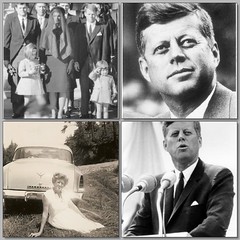
I was six months old on Saturday, November 24, 1962. Naturally I have no real memories of this day. What I know comes from Sister Dear who was six at the time. We had just celebrated Thanksgiving the previous Thursday. More than likely my parents had driven my sister and I to their shared hometown to visit with my Dad’s folks and then my Mom’s. Little did anyone know it would be the last time my Mom saw her mother alive. Sister Dear recollects the phone ringing that Saturday afternoon and nothing ever being the same again. She tells me now that Mother began wailing and flung herself across her bed. Sister Dear remembers simply standing and staring at Mother as she became a grieving, heaving mass of pain. When she remembers that moment she sees a collage of images of mother mixed with the piney hardwood floor of our hallway, the old radio that had been mothers as a teen now used as a phone table in the hallway, and how time seemed to stand still. Sister Dear was watching Mother’s agony as she had been told her mother had been found dead of a heart attack at the age of 62.
It was sudden. It was cruel. It was not what anyone would have expected. In writing that my Mother has left behind she states Nanny was tall and slender with broad shoulders. She had beautiful skin and dark, thick, course hair. She was a great cook and seamstress----most of the clothes my mother wore were handmade by my grandmother. She was always a cheerful person---smiling, laughing, and always hid any problems she might have---plus she always wanted to do something to help people who were less fortunate than herself.
Sister Dear speaks of our “Nanny” by describing her simply as FUN. She remembers having great times with Nanny. In every picture I have ever seen of my grandmother she is wearing a June Cleaver type dress…..shirtwaist, short sleeves, and full skirt. Sister Dear tells that Nanny would place her in the hem of her skirt and swing her back and forth. That had to be fun. Sister Dear tells of waking on warm mornings and gazing up on the wall where a picture hung of a little boy and a little girl. They were about to cross a bridge and an angel was hovering at their shoulders. She has told me this picture actually scared her. We were told as children that the boy and girl were on their way to Heaven. I remember the framed print too…….it scared me as well. Sister Dear has told me she would lie in bed the longest time and try NOT to feel sorry for the kids, but it was hard. As an adult I now understand the significance of that print. My grandmother had bore tragedy upon tragedy as young woman. Her first husband had been shot to death in front of her, and she had lost three children….one to sickness, one got ahold of some medicine that had been left out, and a baby boy had been born dead. The print that scared my sister and I so probably gave comfort to our grandmother and might have been the reason it hung in the spare bedroom.
Once up Sister Dear would walk into the front room and find a big bowl of blueberries on the floor between the screen door and door jam. She’d sit on the gritty floor and munch away. It always seemed, Sister Dear says, that Nanny would just know she was up and awake. She’d turn from her chores in the garden and give a hearty good mornin’ wave, and Sister Dear's day of fun would begin by building a playhouse out of tongue and groove planks and a cardtable Nanny would provide for her. I’ve always been told Nanny loved working with plants and apparently she could get anything to grow anywhere. Sister Dear remembers Nanny always smelled deliciously of outside, sunshine, and fresh turned earth. Things could be done at Nanny’s house that could not be done at home. Nanny always allowed Sister Dear to make mud pies on the porch not with water, but with real honest to goodness buttermilk.
Sister Dear remembers Daddy holding her as they stood in front of the casket set up in the front room of my grandparent’s home, and she remembers the funeral which took place at the one room wooden church with the obligatory outhouse in the back plopped in the piney woods where three generations of my mother’s family scratched the dirt. The land for the church had at one time been part of the family farm, but my great grandfather had donated it to the church folk. Nanny was laid to rest in dirt that was home to her. Sister Dear remembers a long service, our distraught mother who we now know had been given something to keep her calm and quiet, and the long row of our grandfather’s half-sisters who were actually more in line with our mother’s age than our grandfather’s. Each dear aunt took her turn holding Sister Dear in her lap….first Dee, then Blanche, then Claudine, then Nelle, and Elizabeth and then back to Nelle, then Claudine, then Blanche, and then Dee where the whole process started over again.
Mother grieved. Years later Mother spoke of grieving hard. She often said the knowledge that she had to take care of Sister Dear and I got her through, but there were days she didn’t know if she could make it. Our grandfather grieved hard as well. Sister Dear remembers his home being fun. I remember it as dark and dusty shrine much like the Haversham bedroom in Great Expectations. Many things were left exactly like they were the day Nanny left us even down to her pin cushion which always hung on a nail in the hallway with the pins in it just like they were the last time Nanny used it. As I grew older it remained hanging on its nail fading in color with the dust eventually caking over it until it was practically rotten.
The remainder of this post can be found at American Presidents Blog here.
I believe it is possible.
I know it is possible.
I know it because I participate in this kind of love and admiration everyday for two vastly different Americans who left this Earth almost a year to the day from one another. My admiration for these two inviduals stems from my mother who shared her memories of them with me during my formative years where they became entertwined and linked indelibly in the murkiness where actual memory and grafted memories blend.
I was six months old on Saturday, November 24, 1962. Naturally I have no real memories of this day. What I know comes from Sister Dear who was six at the time. We had just celebrated Thanksgiving the previous Thursday. More than likely my parents had driven my sister and I to their shared hometown to visit with my Dad’s folks and then my Mom’s. Little did anyone know it would be the last time my Mom saw her mother alive. Sister Dear recollects the phone ringing that Saturday afternoon and nothing ever being the same again. She tells me now that Mother began wailing and flung herself across her bed. Sister Dear remembers simply standing and staring at Mother as she became a grieving, heaving mass of pain. When she remembers that moment she sees a collage of images of mother mixed with the piney hardwood floor of our hallway, the old radio that had been mothers as a teen now used as a phone table in the hallway, and how time seemed to stand still. Sister Dear was watching Mother’s agony as she had been told her mother had been found dead of a heart attack at the age of 62.
It was sudden. It was cruel. It was not what anyone would have expected. In writing that my Mother has left behind she states Nanny was tall and slender with broad shoulders. She had beautiful skin and dark, thick, course hair. She was a great cook and seamstress----most of the clothes my mother wore were handmade by my grandmother. She was always a cheerful person---smiling, laughing, and always hid any problems she might have---plus she always wanted to do something to help people who were less fortunate than herself.
Sister Dear speaks of our “Nanny” by describing her simply as FUN. She remembers having great times with Nanny. In every picture I have ever seen of my grandmother she is wearing a June Cleaver type dress…..shirtwaist, short sleeves, and full skirt. Sister Dear tells that Nanny would place her in the hem of her skirt and swing her back and forth. That had to be fun. Sister Dear tells of waking on warm mornings and gazing up on the wall where a picture hung of a little boy and a little girl. They were about to cross a bridge and an angel was hovering at their shoulders. She has told me this picture actually scared her. We were told as children that the boy and girl were on their way to Heaven. I remember the framed print too…….it scared me as well. Sister Dear has told me she would lie in bed the longest time and try NOT to feel sorry for the kids, but it was hard. As an adult I now understand the significance of that print. My grandmother had bore tragedy upon tragedy as young woman. Her first husband had been shot to death in front of her, and she had lost three children….one to sickness, one got ahold of some medicine that had been left out, and a baby boy had been born dead. The print that scared my sister and I so probably gave comfort to our grandmother and might have been the reason it hung in the spare bedroom.
Once up Sister Dear would walk into the front room and find a big bowl of blueberries on the floor between the screen door and door jam. She’d sit on the gritty floor and munch away. It always seemed, Sister Dear says, that Nanny would just know she was up and awake. She’d turn from her chores in the garden and give a hearty good mornin’ wave, and Sister Dear's day of fun would begin by building a playhouse out of tongue and groove planks and a cardtable Nanny would provide for her. I’ve always been told Nanny loved working with plants and apparently she could get anything to grow anywhere. Sister Dear remembers Nanny always smelled deliciously of outside, sunshine, and fresh turned earth. Things could be done at Nanny’s house that could not be done at home. Nanny always allowed Sister Dear to make mud pies on the porch not with water, but with real honest to goodness buttermilk.
Sister Dear remembers Daddy holding her as they stood in front of the casket set up in the front room of my grandparent’s home, and she remembers the funeral which took place at the one room wooden church with the obligatory outhouse in the back plopped in the piney woods where three generations of my mother’s family scratched the dirt. The land for the church had at one time been part of the family farm, but my great grandfather had donated it to the church folk. Nanny was laid to rest in dirt that was home to her. Sister Dear remembers a long service, our distraught mother who we now know had been given something to keep her calm and quiet, and the long row of our grandfather’s half-sisters who were actually more in line with our mother’s age than our grandfather’s. Each dear aunt took her turn holding Sister Dear in her lap….first Dee, then Blanche, then Claudine, then Nelle, and Elizabeth and then back to Nelle, then Claudine, then Blanche, and then Dee where the whole process started over again.
Mother grieved. Years later Mother spoke of grieving hard. She often said the knowledge that she had to take care of Sister Dear and I got her through, but there were days she didn’t know if she could make it. Our grandfather grieved hard as well. Sister Dear remembers his home being fun. I remember it as dark and dusty shrine much like the Haversham bedroom in Great Expectations. Many things were left exactly like they were the day Nanny left us even down to her pin cushion which always hung on a nail in the hallway with the pins in it just like they were the last time Nanny used it. As I grew older it remained hanging on its nail fading in color with the dust eventually caking over it until it was practically rotten.
The remainder of this post can be found at American Presidents Blog here.
Thursday, November 23, 2006
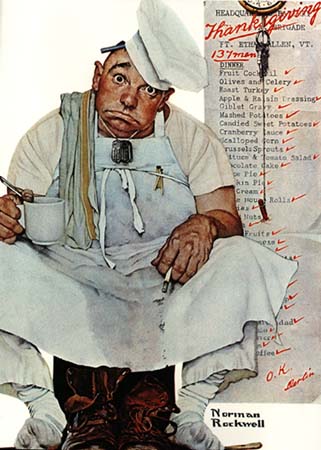
Thursday Thirteen 2, Thanksgiving Myths
 |
1. The Pilgrims celebrated the first Thanksgiving. There is much debate where the Pilgrims held a harvest celebration or a time of thanksgiving. They did not refer to their three day feast as Thanksgiving as we refer to it. This feast did not become a yearly event, and it was not until the 1800s that Americans began to think about a regular Thanksgiving celebration.
|
The purpose of the meme is to get to know everyone who participates a little bit better every Thursday. Visiting fellow Thirteeners is encouraged! If you participate, leave the link to your Thirteen in others comments. It’s easy, and fun! Be sure to update your Thirteen with links that are left for you, as well! I will link to everyone who participates and leaves a link to their 13 things. Trackbacks, pings, comment links accepted!
View More Thursday Thirteen Participants
Wednesday, November 22, 2006
What's All the Hubbub, Bub? All I Want Is Turkey, Family, and a Little Football
Tomorrow is Thursday and folks who participate in the Thursday Thirteen meme will be posting their list for the week. I posted my first list last week. I decided to join the meme because it looked interesting and I thought it might be a great way to attract people to this site who are not involved in education. I decided that I could incorporate history and educational issues into my list each week.
Since tomorrow is Thanksgiving I thought a list of Thanksgiving myths or misconceptions would be appropriate. Wow, there is quite a debate going on out there, and a multitude of misinformation exisits even on the debunking sites.
The first thing I did was google “Thanksgiving myths”. After I had gone through the first couple of pages of hits my head was actually reeling. There is a large amount of information, misinformation, and spin…..not to mention a large amount of copycats.
One website attempts to take on all comers and actually attempts to use primary sources to support his thoughts. Imagine that! Jeremy Bangs, a former curator at Plymouth Plantation, has posted an excellent posting which wades through many of the myth webpages zipping around the Internet. You can see his three-page work here.
Mr. Bangs states:
Surveying more than two hundred websites that “correct” our assumptions about Thanksgiving, it’s possible to sort them into groups and themes, especially since Internet sites often parrot each other. Very few present anything like the myths that most claim to combat. Almost all the corrections are themselves incorrect or banal. With heavy self-importance and pathetic political posturing, they demonstrate quite unsurprisingly that what was once taught in grade school lacked scope, subtlety, and minority insight.
One could go on. Someone should go on. To respond to all the assorted internet nonsense about Thanksgiving it is necessary to go on and on.
He then refers you to the site I have linked to above.
History News Network has some great articles up under the heading “Thanksgiving” but they appear to be a repeat since many of the comments are dated 2002 and 2003. An item under “Breaking News” caught my eye.
In an Associated Press article titled Teachers Emphasize the Indians reprinted here there is a discussion regarding how many elementary teachers are abandoning the romanticized version of Thanksgiving and settling for the more realistic version. The article discusses a teacher who attempts to get students to realize Europeans came and took possession of lands without any thought that they might already belong to someone else.
“I think that is very sad,” said Janice Shaw Crouse, a former college dean and public high school teacher and now a spokewoman for Concerned Women for America, a conservative organization. In criticisim of the teacher detailed in the article Ms. Crouse states, “He is teaching his students to hate their country. That is a very distorted view of history, a distorted view of Thanksgiving.”
Personally, I think Ms. Crouse is wrong. There is a place in our classrooms for the realistic as well as the romanticized versions of history including Thanksgiving. My students realize that when Columbus landed in the Carribbean and claimed the land in the name of the Queen of Spain it wasn’t his to claim. Does the fact that my students understand Plymoth Plantation was once a Patuxet village and the Pilgrims simply took it over mean they will hate their country? I think not. I think the knowledge helps them to understand their country better.
That being said I firmly believe a great responsibility lies with the classroom teacher to help students bridge the gap between realism and romanticism. We should provide enough background to students so they see the context of the time period. I explain to students that we are constantly uncovering new information that can be documented about historical events. Many things I learned in school has since been updated. Many things they learn today will more than likely be updated as more investigation is made.
Rick Shenkman, editor at History News Network weighs in here with Top 10 Myths About Thanksgiving.
Timothy Walch tries his hand with Thanksgiving Myths here. He states:
So what do most Americans believe happened on that first Thanksgiving Day? Most still cling to what they learned in elementary school. The Pilgrims sat down with Indians for a big meal of turkey, cornbread, cranberries and pumpkin pie. The Pilgrims dressed in black, and the Indians wore feathers and colorful beads. In fact, many Americans today still recall if they were "pilgrims" or "Indians" in their school pageants.
It's a charming story, but it's a myth. To be sure, it's a powerful one -- one that will be repeated many times this November. The fact that it's so pervasive is evidence that American myths have long lives.
So it's a good thing that Americans today are not tested on the history of that first Thanksgiving, because few of us would earn a passing grade. It seems that the historical evidence of Thanksgiving is not as compelling as the myths that cloud our memories. It's too bad that childhood images of Pilgrims and Indians aren't based on historical facts.
Here is the part of Walch’s essay that really hit home for me:
And yet there's a legacy about this holiday that threads its way from past to the present and defies both myth and historical evidence. That legacy is generosity. To be sure, Americans today may not be as religious as the Pilgrims, but most Americans do share their plenty with their family and friends on this special day. It's a holiday that brings all Americans, no matter their creed or disposition, together. And that's something worthy of our thanks.
Does it matter what they served, who served it, what they wore? I agree with Mr.Walch. We need to remember for one brief shining moment Native Americans and Europeans, though they may have been wary of one another, sat down and broke bread. They shared a meal, they interacted, they tried to understand each other. It would be a shame not to share this fact with students as well.
We can all argue, quote, and requote, until kingdom come but one thing is for sure. Just like in any historical investigation we need to look at the artifacts and the written sources. If you can’t verify it then it is simply conjecture. I’m going to post my list of 13 myths tomorrow. Anyone who wants to quibble is welcome to do so, but come armed with primary source documentation from the various writings of Willam Bradford or other involved people of the time.
Since tomorrow is Thanksgiving I thought a list of Thanksgiving myths or misconceptions would be appropriate. Wow, there is quite a debate going on out there, and a multitude of misinformation exisits even on the debunking sites.
The first thing I did was google “Thanksgiving myths”. After I had gone through the first couple of pages of hits my head was actually reeling. There is a large amount of information, misinformation, and spin…..not to mention a large amount of copycats.
One website attempts to take on all comers and actually attempts to use primary sources to support his thoughts. Imagine that! Jeremy Bangs, a former curator at Plymouth Plantation, has posted an excellent posting which wades through many of the myth webpages zipping around the Internet. You can see his three-page work here.
Mr. Bangs states:
Surveying more than two hundred websites that “correct” our assumptions about Thanksgiving, it’s possible to sort them into groups and themes, especially since Internet sites often parrot each other. Very few present anything like the myths that most claim to combat. Almost all the corrections are themselves incorrect or banal. With heavy self-importance and pathetic political posturing, they demonstrate quite unsurprisingly that what was once taught in grade school lacked scope, subtlety, and minority insight.
One could go on. Someone should go on. To respond to all the assorted internet nonsense about Thanksgiving it is necessary to go on and on.
He then refers you to the site I have linked to above.
History News Network has some great articles up under the heading “Thanksgiving” but they appear to be a repeat since many of the comments are dated 2002 and 2003. An item under “Breaking News” caught my eye.
In an Associated Press article titled Teachers Emphasize the Indians reprinted here there is a discussion regarding how many elementary teachers are abandoning the romanticized version of Thanksgiving and settling for the more realistic version. The article discusses a teacher who attempts to get students to realize Europeans came and took possession of lands without any thought that they might already belong to someone else.
“I think that is very sad,” said Janice Shaw Crouse, a former college dean and public high school teacher and now a spokewoman for Concerned Women for America, a conservative organization. In criticisim of the teacher detailed in the article Ms. Crouse states, “He is teaching his students to hate their country. That is a very distorted view of history, a distorted view of Thanksgiving.”
Personally, I think Ms. Crouse is wrong. There is a place in our classrooms for the realistic as well as the romanticized versions of history including Thanksgiving. My students realize that when Columbus landed in the Carribbean and claimed the land in the name of the Queen of Spain it wasn’t his to claim. Does the fact that my students understand Plymoth Plantation was once a Patuxet village and the Pilgrims simply took it over mean they will hate their country? I think not. I think the knowledge helps them to understand their country better.
That being said I firmly believe a great responsibility lies with the classroom teacher to help students bridge the gap between realism and romanticism. We should provide enough background to students so they see the context of the time period. I explain to students that we are constantly uncovering new information that can be documented about historical events. Many things I learned in school has since been updated. Many things they learn today will more than likely be updated as more investigation is made.
Rick Shenkman, editor at History News Network weighs in here with Top 10 Myths About Thanksgiving.
Timothy Walch tries his hand with Thanksgiving Myths here. He states:
So what do most Americans believe happened on that first Thanksgiving Day? Most still cling to what they learned in elementary school. The Pilgrims sat down with Indians for a big meal of turkey, cornbread, cranberries and pumpkin pie. The Pilgrims dressed in black, and the Indians wore feathers and colorful beads. In fact, many Americans today still recall if they were "pilgrims" or "Indians" in their school pageants.
It's a charming story, but it's a myth. To be sure, it's a powerful one -- one that will be repeated many times this November. The fact that it's so pervasive is evidence that American myths have long lives.
So it's a good thing that Americans today are not tested on the history of that first Thanksgiving, because few of us would earn a passing grade. It seems that the historical evidence of Thanksgiving is not as compelling as the myths that cloud our memories. It's too bad that childhood images of Pilgrims and Indians aren't based on historical facts.
Here is the part of Walch’s essay that really hit home for me:
And yet there's a legacy about this holiday that threads its way from past to the present and defies both myth and historical evidence. That legacy is generosity. To be sure, Americans today may not be as religious as the Pilgrims, but most Americans do share their plenty with their family and friends on this special day. It's a holiday that brings all Americans, no matter their creed or disposition, together. And that's something worthy of our thanks.
Does it matter what they served, who served it, what they wore? I agree with Mr.Walch. We need to remember for one brief shining moment Native Americans and Europeans, though they may have been wary of one another, sat down and broke bread. They shared a meal, they interacted, they tried to understand each other. It would be a shame not to share this fact with students as well.
We can all argue, quote, and requote, until kingdom come but one thing is for sure. Just like in any historical investigation we need to look at the artifacts and the written sources. If you can’t verify it then it is simply conjecture. I’m going to post my list of 13 myths tomorrow. Anyone who wants to quibble is welcome to do so, but come armed with primary source documentation from the various writings of Willam Bradford or other involved people of the time.
Tuesday, November 21, 2006
Squanto: A Coincidental Life, Part 2
 In part one of this post seen here I commented that I believe certain people and events are placed in our paths for very definite reasons. I like to tell students the true story behind Squanto because his story provides opportunities to look at myth versus fact as well as issues of character. For many years Squanto bounced back and forth between Europe and New England mostly through no choice of his own, however, his experience, tragic as it is, served a very real purpose. Each life lesson Squanto experienced was filed away in his toolbelt to be pulled out later when it was needed. I like to teach students they all have their own toolbelts as well.
When we last left Squanto he had finally arrived back on his home shores to discover every member of his village had been wiped out by a plague.
Historians love to banter over which type of plague raced through native villages during 1616-1619, but the important item for my use with students is Squanto was the last Patuxet left. His village had been abandoned, everything left idle as it was the day the last tribal member had succumbed to disease.
For a time Squanto resided with the Pokanokets at the invitation of Massasoit, the Grand Sachem of the Wampanoag Federation.
In 1620, however, the Mayflower arrived with men, women, and children. Their original destination had been Virginia, but a storm blew them off course. John Smith had previously explored and mapped this region and is credited with naming the area Plymouth. When a landing party finally went ashore to scope things out they found an abandoned village and decided it would be an ideal location for settlement since it was already cleared.
It was several months before the Native American known as Samoset finally walked into Plymouth and greeted the Pilgrims. It was on his third visit to Plymouth on March 22, 1621 that he brought Squanto with him. Squanto was amazed that Plymouth was located exactly where his home village had been. The Patuxet village had now become home to the Pilgrims. The Pilgrims used these initial visits with Samoset and later with Squanto to improve trade relations and to formalize a peace treaty.
Squanto decides to stay with the Pilgrims. His knowledge of the surrounding lands proved to be the saving force of the colony. Squanto showed the Pilgrims where the most fish and eels could be found as well which berries and nuts were edible. He is credited with teaching the Pilgrims the ways of the Patuxet including their practice of planting beans and corn together. The bean plant shaded the corn roots and kept the ground moist while the corn plant provided a stake for the bean plant to cling to. Squanto remembered as a boy he was instructed to place three fish inside the hill of soil where the corn and beans were planted in order to provide fertilizer for the soil. It was beneficial for Massasoit to leave Squanto with the Pilgrims because he could let the Wampanoag Federation know what the Plymouth settlers were up to.
Squanto’s information paid off for the Pilgrims because they were able to celebrate their harvest….the same one we have turned into our traditional American Thanksgiving. Massasoit along with 90 braves brought five deer. The feasting lasted for three days.
The Pilgrims greatly appreciated Squanto’s knowledge. Squanto reprised his profession of translator and guide with the settlers as he helped them on many expeditions into the countryside “to discover and view [Massachusetts] bay and trade with ye natives…partly to see the country, partly to make peace with them, and partly to procure their trucke, or barter” per Miles Standish. At one point when Squanto was away visiting a local village he was attacked by Chief Corbitant of the Mattapoinset and Pocasset tribes. Records pertaining to Miles Standish indicate many Pilgrim men set out immediately upon finding out Squanto was in distress to “rescue him if he were alive or to punish Corbitant if he had been killed.”
Naturally both the Native Americans and the English trusted Squanto. Both sides left records indicating that later on Squanto used his knowledge of living in both worlds to his advantage to gain even more power and respect. He knew his fellow natives were scared of further plague. He invented a story to tell the natives that the English had buried the plague in barrels under their storehouse. Squanto attempted to control the natives by telling them he would release the plague unless they did what he told them to.
At another point Squanto was accused of attempting to spread rumors of a conspiracy involving Massasoit. Rumors were being spread that an attack by members of the Wampanoag Federation were eminent and Massasoit was involved. The rumors had one source….Squanto. He was hauled before the English court but was found innocent probably because he “had friends at court” per the diary of Miles Standish. Massasoit demanded custody of Squanto many times since Wampanoag custom demanded Squanto’s death, but the English refused knowing what the outcome would be. This clearly violated the treaty the English had with Massasoit, but Squanto’s capabilities were invaluable to the Pilgrims.
During a foraging trip on the south ocean side of Cape Code Squanto became ill in November, 1622. Many accounts differ regarding exactly what was wrong but they all agree that Squanto began to bleed from the nose and was soon dead.
In his history, Of Plimoth Plantation Bradford states, “their interpreter and was a special instrument sent of God for their good beyond their expectation. He Squanto continued with them and was directed them how to set their corn, where to take fish, and to procure other commodities, and was also their pilot to bring them to unknown places for their profit, and never left them till he died.”
Last week before our break I showed a great video to my all of my students, even my Languages Arts kiddies. It’s a common problem in elementary schools that there are not enough videos to go around and commonly you present something students have seen over and over every year. I never have a problem with this video. It sort of mystifies because it so good, and opens the door for many avenues of discussion. The video is based on the book Squanto and the First Thanksgiving by Eric Metaxes and consists of pictures from the book with Graham Green narrating it. The music, the wonderful artwork, and the haunting voice of Mr. Green really draws students into the story. You can get more information about the video including a video clip and audio clip here. The video tells the basics. It doesn’t go into many of the extra details I have shared with you, but students learn of the odyssey Squanto goes through in an attempt to get back home. They learn how by coincidence the Pilgrims ended up where they did and settle on land that Squanto grew up on.
After the video we talked about all the bad things Squanto had gone through….how scared he must have been, how angry, how confused at being someone who had lived in both worlds, and how that knowledge caused him to be used by both worlds, and at one point even corrupted him. Many of the kids I teach have had terrible things happen to them and within their families. They see things at nine years old I didn’t know about until I was in my twenties. My point in our “after video discussion” was bad things happen to everyone…….it’s how you allow those bad things to interact with your character that makes a difference.
Every moment of our lives, the fantastic times and the horrible times, are part of a dress rehersal to be recalled during the actual performance when we are needed to do our part. Squanto is an exemplary portrait of someone who understood his role in the dual society he lived in, and he is a valuable American hero to share with students of all ages.
Sunday, November 19, 2006
Squanto: A Coincidental Life, Part 1

If you are a regular visitor here you already know that I am interested in how historical events connect and weave together to form our common human fabric. I am continually amazed at how events can have far reaching consequences….some across time…..some simply across town. What at first glance appears to be mere circumstance is instead a very carefully woven plan. I believe I know the author of that plan, but of course, that’s up to you to decide for yourself!
I love to share the story of Squanto with students because his life proves certain events and certain people are placed in our paths for reasons. We endure good times and hard times for various reasons. Sometimes we know the reasons immediately, sometimes the reasons are not made clear until later, and other times we are never aware of the far reaching effects of our actions and the people we interact with.
As we journey on through life our experiences teach us various things that we store in our toolbelt for life to be pulled out later as we need to recall the knowledge or the skill to help ourselves or others. This process can certainly be seen in Squanto’s life---that of a true American adventurer and hero.
Most elementary students are taught Squanto lived in the area where the Pilgrims first landed and he helped the Pilgrims learn how to meet their basic needs in their new homeland. While this true there is so much more to learn about this fascinating man. His life can be described as a tempest filled with grief, betrayal, as well as adventure. Squanto, of course, never wrote his own autobiography. The sources that contain information about him are few and far between and only give us snippets of his life, but a trail of events can be pieced together.
Squanto was a member of the Patuxet tribe and lived along the coast of New England near where Cape Cod is today. As Squanto became older contact with Europeans was becoming more and more common as various sea captains began to explore the coast of North America. Once the Jamestown colony was established in 1607 other entrepreneur types wanted to get in on the ground floor, and other possible sites for colonies were being investigated. English and French ships were known to fish the waters along the New England coast and they also traded with different Native American groups for furs.
It was not uncommon for some of the European sea captains to take Native Americans back to Europe with them with or without their consent. These natives were beneficial to the Europeans because they could be taught English and could inform the sea captains regarding important information regarding their homeland. The natives were a wealth of information regarding tribal and chief names, the lay of the land, which tribes were at peace and which tribes were at war. Other information could be obtained regarding crops that could be grown, the climate, rivers, and information regarding safe harbors.
According to the memoirs of Sir Ferdinando Gorges who joined the Plymouth Company in 1606, Squanto was kidnapped and taken to England in 1605 by Captain George Weymouth who was on a fact finding mission regarding resources of the Canadian and New England coast. In his own letters Weymouth writes that he decided to take a couple of natives back with him but had a hard time controlling them “for they were strong and so naked as our best hold was by their long hair.” Gorges confirms Squanto remained in England for nine years actually living with him before returning to the New World during John Smith’s 1614 voyage where Squanto would act as a guide and interpreter.
If Squanto acted as guide on any expeditions prior to 1614 there are no records to indicate it. There is a record of Squanto being a passenger on John Smith’s ship as he left England to return to the New World in March, 1614 accompanied by a second ship captained by Thomas Hunt. The purpose for the expedition was to hunt for whales and to look for gold. When it became apparent that they were not adept at catching whales and no information regarding gold was obtained Smith decided to save the voyage by fishing and trading for furs. It is believed that it was during this trip that Squanto was close enough to return to his home for a time. Smith ended up returning to England with a full cargo of fish and fur.
Captain Hunt remained in the area and it is believed Squanto acted at times as his interpreter. Their relationship, however, apparently deteriorated as Gorges relates in his report A Brief Relation of the Discovery and Plantation of New England confirms that it was at this point Hunt kidnapped Squanto along with others who were lured on board thinking they could trade beaver. Hunt travelled to Malaga, Spain and attempted to sell the Native Americans into slavery for twenty pounds each.
When local friars found out the intended slaves were Native Americans they took possession of them and attempted to instruct them in the Christian faith. Squanto lived with the friars for a year or two before returning to London with an Englishman named Sir John Slaney of Cornhill who was a very wealthy merchant. Slaney was attached to the Newfoundland Company which managed a colony at Cupper’s Cove, Newfoundland. While he resided with Slaney, Squanto improved his English and returned to North America to act as an interpreter for Slaney and Captain John Mason, governor of the Newfoundland Colony in 1617.
While in Newfoundland Squanto was recognized by Captain Thomas Dermer who was employed by Gorges and the New England Company. Dermer had sailed with John Smith on various voyages. The captain ended up returning Squanto to Gorges back in England. Gorges promptly took advantage of the situation by organizing an expedition for Dermer aided by Squanto to explore the natural resources of New England and to set up trade agreements with the local natives.
Dermer and Gorges both realized by this time the Nauset and Patuxet tribes had had enough of their tribesmen being attacked and kidnapped by Europeans. The natives had taken to attacking any ship that approached their shores. Records indicate they attacked and burned a French ship that came to close to Nauset shores. Gorges knew that having Squanto along would be beneficial.
In 1619 Squanto and Dermer explored what would one day be Plymouth harbor. It was at this time Squanto discovered his entire tribe had perished at the hands of plague since he had last been home in 1614. Squanto was now the last Patuxet. His home village was being avoided by other Native Americans in the area for fear of catching the sickness that had decimated the tribes and there were stories that evil spirits haunted the place.
For a time Squanto continued to work with Dermer but eventually decided to remain with the Pokanokets who lived where Bristol, Rhode Island is today at the invitation of Massasoit, the Grand Sachem of the Wampanoag Federation.
Part 2 of my examination of Squanto’s can be found here.
Friday, November 17, 2006
As Seen on My Computer Screen This Week...Items That Are Notable and Quotable

Today was my final day before a week long Thanksgiving break. While these days can be very difficult, today’s “day before break begins” was actually very enjoyable. Our fourth graders experienced Gobble Up Books Day, an activity very similar to DEAR (Drop Everything and Read). We read all day……….students read books based on their independent reading level and took Accelerated Reader tests for comprehension in every class. Over the last few weeks all of my students except for three have qualified for a reward party based on the number of points they have accumulated. The three that haven’t yet are well on their way, and I should have 100% by Christmas. One of my unmotivated boys has reached his goal. When I found out I sought him out in the lunchroom, placed my arm around his shoulder and said, “I’m so proud of your accomplishment. If you keep this up you will be a dynamite 5th grader.” He just grinned. After lunch he was the first one in the room saying, “C’mon, let’s get back to reading. I love to read!” It was a lovely day. I got to read all day as well. No discipline problems. No petty tattle-telling. I swear I entered a parallel universe today. I already have thanksgiving in my heart.
On the other hand Mrs. Cornelius spent quite a different day than I did. See her recap here.
Deemae, recently commented on my post Disclose Your Favorite Top Five . I did the polite thing and quickly responded to her comment before clicking on through to visit her site. She had a lovely post titled Thankful For a Good Story. Click on over and read it here. It takes random acts of kindness to a different kind of level.
Have you been by BibliOdyssey lately? The pictures simply amaze me. The technical drawings seen here resemble Leonardo da Vinci but are the work of Mariano di Iacopo, who began at the age of 50 to produce engineering manuscripts. Scroll down past several pictures to read the informative text.
J.L. Bell over at Boston, 1775 has been posting a series of articles about Boston vocabulary I find very interesting. Here is a post on the meaning of “little-house” along with sections of testimony from the trials following the Boston Massacre.
Mountainmanteacherguy, I mean Californiateacherguy, absolutely amazed me this week with his Thursday Thirteen. Go read it here.
Daily Perspective has an update regarding changes at NewspaperARCHIVE.com. The post states: once the changes go through you will be able to read news from each in history…right on the homepage…….each day will also feature current news linked to related newspaper articles from the past, helping to give you some historical perspective on today’s headlines. See the post here.
Well, what I have mentioned here isn’t all that is notable and quotable out and about, but these blogs I’ve mentioned are right up there at the top.
Give these folks a shout out and then go find more…a good start would be at my links list.
Subscribe to:
Posts (Atom)